
Why it matters
The producer
Vasco Croft spent his working life as an architect in Lisbon before returning to his family's Lima Valley estate in 2003 to convert it from grape growing into one of Portugal's first modern biodynamic wine operations. The decision was total. Croft restructured the farm around Rudolf Steiner's biodynamic principles, introducing chestnut orchards, cover crops, animals, and biodynamic preparations alongside the replanted vineyards. He developed alcoholic plant extracts to manage the Lima Valley's humidity while keeping copper treatments low.
The estate now runs from three vineyard holdings: the original Casal do Paço with six hectares, and two further quintas, Espadanal and Valflores, adding fourteen hectares. A new cellar built in 2015 handles the combined harvest from all three. The original stone cellar at Casal do Paço was converted to a pre-industrial winemaking space with no electric equipment, kept for wines made by hand alone.
Place and vineyards
Where the wines begin
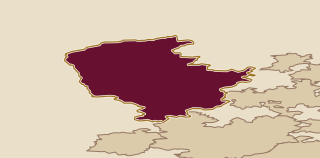
The Lima Valley sits in the far north of Portugal, in the Vinho Verde region, where Atlantic humidity and granite soils define the growing conditions. Rainfall is high and the air rarely dries fully between seasons. For a biodynamic producer, the pressure is constant: vines are susceptible to mildew, and synthetic fungicide is off the table. Croft's response was to develop his own plant-based sprays and keep copper applications to a minimum, turning the valley's dampness into a farming constraint rather than a reason to abandon the method.
Loureiro is the white grape most at home in the Lima sub-region, and Vinhão, the red, produces wines with deep colour and firm acidity in this northern corner of the appellation.
In the cellar
Vineyards and cellar
The twenty hectares across Casal do Paço, Espadanal and Valflores are farmed without synthetic herbicides, pesticides or fungicides. Biodynamic preparations, chestnut orchards, cover crops and animals are all part of the farm system. Croft uses alcoholic plant extracts developed at the estate for mildew pressure, supplementing rather than replacing copper.
The 2015 cellar handles the main range with conventional equipment. The converted stone cellar at Casal do Paço processes wines with no electricity: hand work only, in keeping with pre-industrial practice. The Phaunus Pet Nat is made by the ancestral method, completing a single fermentation in bottle with no added yeasts or sugar, then disgorged after nine months.
Wines to know
The range in view
The range divides into still and sparkling, white and red, across two main labels. Aphros Ten is the entry-level Loureiro: picked early to hold alcohol at ten percent, the alcohol figure its name records. It is the lightest and freshest wine in the range, built on citrus, pear and herb aromatics with a saline finish.
The Phaunus label covers the more experimental territory. Phaunus Pet Nat comes in white and rosé versions, both made by the ancestral sparkling method. A Loureiro aged in amphora adds texture and a broader mid-palate while keeping the grape's citrus character. The Vinhão wines are red, made from the dark-skinned Lima Valley grape that produces dense colour and high natural acidity.
A useful way in
A bottle to begin with
Aphros Ten is where to begin. It is Loureiro grown biodynamically in the Lima Valley, picked at ten percent alcohol, and built around lime zest, fennel, dried herbs and a saline finish. The low alcohol is not a reduction of flavour but a consequence of early picking: the grape's citrus and herb aromatics are fully present, held in a wine that stays light-bodied and bright throughout. The balance between acidity, a touch of sweetness and that mineral finish is what the Lima Valley Loureiro does under careful farming, and the Ten makes that character easy to find.