
Why it matters
The producer
Chris and Suzaan Alheit started this project in 2010 with an argument built into its name. Cartology is not a vineyard or a village; it is a word for the practice of making maps. The wine named after it draws from nine parcels scattered across six Cape regions, assembled each vintage to read as a portrait of the Cape rather than a statement about any single piece of ground.
This is a small operation: 21 hectares of vineyard, eight sites, two people, and a cellar philosophy that refuses intervention. No commercial yeasts, no enzymes, no acidification, no fining. The old vines and ambient yeasts determine what goes into the bottle.
Place and vineyards
Where the wines begin
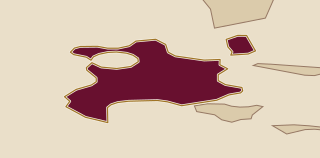
Alheit's vineyards are not neighbours. The parcels that feed Cartology span Skurfberg, Paardeberg, Perdeberg, Bottelary, False Bay, and Botrivier: a range of elevations, aspects, and ocean influences spread across the Western Cape. No single appellation name appears on the label, because no single appellation defines the wine. The bottle carries a Western Cape designation, which in South Africa permits fruit sourcing across the broader coastal and inland zones.
That geographic spread is a deliberate editorial choice. Each region contributes something different to the blend, whether cooler coastal lift from False Bay, the drier heat of Skurfberg, or the wind-shaped bush vines of Paardeberg. The wine's saline mineral character comes in part from this breadth: no single regional signature dominates.
Wines to know
The range in view
The range is small. Cartology is the flagship, drawn from nine parcels across six regions. It is a dry white wine with a pale gold colour, tight acidity, and a texture built more from extended lees contact than from any fruit weight. The Sémillon component adds a waxy, lanolin note to the Chenin Blanc base and contributes to the wine's grip on the finish.
Fire by Night is a single-site white wine, also Chenin Blanc-dominant. Where Cartology is assembled to speak broadly, Fire by Night speaks specifically to one parcel and one place. The two wines sit in deliberate contrast: multi-region breadth against single-site depth.