
Why it matters
The producer
Antiche Terre Venete sits in the Valpantena, a narrow valley that runs north from Verona and sits just east of the Valpolicella Classica zone. The estate grows Corvina, Corvinone, and Rondinella on clay-limestone slopes and builds its range around those three grapes. Its anchor wine is Amarone della Valpolicella, made by the traditional appassimento method: hand-harvested grapes dried in wooden trays for roughly 90 to 120 days before fermentation, with the finished wine spending a minimum of 18 months in wooden containers.
The winery came into being around 2000 as a formal estate, though the family connection to this land goes back to the early twentieth century. Vittorio Sancassani cultivated grapes in the Valpantena in the early 1900s. The land stayed in the family through two more generations before a nephew, Luciano, resolved to make a winery of it. A second family joined the enterprise, and the estate describes itself today as the meeting point of two families and a shared ambition.
Place and vineyards
Where the wines begin
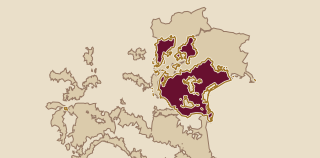
Valpantena is one of the lateral valleys that branch off from the Adige plain northeast of Verona. It falls within the broader Valpolicella denomination but carries its own sub-designation: wines from here may add the word Valpantena to the appellation name on the label, distinguishing them from the Classica zone to the west and from the extended Valpolicella area that stretches further east.
The valley matters for Amarone because the denomination covers this entire arc of hills, and grapes grown here qualify for the same appellation as those from the older Classica heartland. The difference is landscape and soil. Valpantena is a tighter valley, and the slopes that face the valley floor collect light and drain cold air at night, which helps preserve acidity through the long growing season that Amarone requires.
In the cellar
Vineyards and cellar
Manual harvest begins in the second half of September. Grapes destined for Amarone are selected in the vineyard and placed in small wooden trays in drying lofts, where low humidity and cool autumn air remove roughly a third of their weight over 90 to 120 days. That concentration raises sugar levels dramatically, deepens colour, and shifts the aromatic register toward dried plum and cherry while adding layers of dried spice.
Fermentation follows the extended drying. The resulting wine, dense with sugar and extract, ferments to high alcohol and retains some residual character before moving into wooden containers for a minimum of 18 months of ageing. The oak contact at this stage adds the toasted spice character that marks the palate: measured rather than heavy, given the estate's own description of misurato affinamento in legno, measured wood maturation.
Wines to know
The range in view
The range is built around two confirmed wines. Amarone della Valpolicella is the lead bottle: Corvina, Corvinone, and Rondinella dried for 90 to 120 days, fermented to full weight, aged a minimum of 18 months in wood. It is a full-bodied red with concentrated dark fruit, dried spice, and firm tannin from both the appassimento concentration and the oak contact. This is not a wine for the first week after purchase; the wood ageing and the extract from dried grapes both need time to integrate.
Valpolicella Valpantena is the second confirmed wine: 50 percent Corvinone, 35 percent Corvina, 15 percent Rondinella, without the drying stage. The wine carries the Valpantena sub-designation on the label and offers a more accessible version of the same grape trio, with lighter body, red cherry fruit, and softer tannin than the Amarone. It works as a companion to the Amarone in the range, giving drinkers a way into the denomination before committing to the intensity of the dried-grape wine.
A useful way in
A bottle to begin with
Start with the Amarone della Valpolicella. It is what Antiche Terre Venete exists to make, and it carries every decision the estate takes in vineyard and cellar: the clay-limestone slopes of Valpantena, the hand harvest, the three classic grapes of the denomination dried for three to four months in wooden trays, and 18 months of measured oak contact. On the nose: plum, cherry, a trace of raspberry, warm spice. In the mouth: full body, concentrated fruit, firm tannin that asks for food or time, a long finish. This is Amarone at its most transparent, made without pretense about what the wine is and where it comes from.