
Why it matters
The producer
Apothic Wines operates out of Modesto in California's Central Valley, producing red blends built around a single consistent idea: dark fruit, sweetness, and no barrier to entry. The name comes from the Latin apotheca, a place where special things are stored, and the gothic label art has carried that origin story since the brand launched. These are not vineyard wines or estate wines. They are blending and selection exercises, made to be immediately pleasurable.
Apothic Red was first made in 2007 as a trial run of 15,000 cases. Three years later, in 2010, it launched at commercial scale. The timing landed well. American wine drinkers at that price point were moving toward richer, sweeter red blends, and Apothic arrived with a bottle that met that preference directly. The gothic label distinguished it on shelf; the sweetened, low-tannin profile made it easy to drink without food pairing knowledge or wine experience. It sold.
Place and vineyards
Where the wines begin
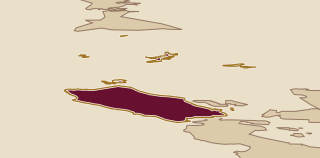
Modesto sits in the San Joaquin Valley, California's warm, high-yielding interior farming region. For Apothic, place is less a vineyard argument than a sourcing address. The brand draws grapes from California without disclosing specific counties, appellations or growers. The label carries "California" as the appellation, which means grapes may come from anywhere in the state. What this produces is consistency of flavour rather than expression of site: the same dark cherry, mocha and vanilla in every bottle, regardless of the vintage year's weather.
No specific vineyard locations, soil types or farming certifications are disclosed for Apothic wines. Selection rather than site is the operating principle: Cabernet grapes chosen for soft tannins, Zinfandel chosen for jammy fruit. The wine is built at the blending stage.
In the cellar
Vineyards and cellar
Apothic does not publish details of oak ageing, fermentation vessels or cellar protocols. What is clear from the flavour profile is that the wines receive some form of sweetening treatment, whether through arrested fermentation, back-blending, or oak-derived vanilla and caramel character. Both wines have a consistently low-tannin, fruit-forward profile. For Apothic Cab, Cabernet grapes are specifically selected for their softest tannins, then blended with a portion of Zinfandel chosen for jammy, plush fruit character.
Wines to know
The range in view
Apothic Red is a blend of Cabernet Sauvignon, Merlot, Syrah and Zinfandel in undisclosed proportions. The four grapes divide labour loosely: Cabernet provides body, Merlot rounds the mid-palate, Syrah adds a dark-fruit base, and Zinfandel contributes the jammy, spiced character that anchors the blend's sweetness. The finish is long and sweet, with very low tannin grip.
Apothic Cab shifts the same philosophy toward a Cabernet-dominant format. A small portion of Zinfandel is blended in specifically for its jammy fruit, while the Cabernet component is selected vineyard-by-vineyard for the softest, most plush tannins available. Apothic Cab has barely detectable tannin, a silky texture, and flavours that run from dark plum and blackberry through caramel and mocha.
A useful way in
A bottle to begin with
Apothic Red is the bottle to start with. It is a four-grape California blend of Cabernet Sauvignon, Merlot, Syrah and Zinfandel, made to deliver immediate pleasure: dark cherry, chocolate, vanilla and mocha, with a long sweet finish and no tannic demand. Open it with food or without. It does not need decanting, does not need a particular glass, and does not need a wine-literate table. That accessibility is deliberate, not a limitation.