
Why it matters
The producer
Argiano sits on the southwestern plateau of Montalcino at 350 metres. The estate covers 125 hectares, with 60 hectares planted to vines and 42 of those in Sangiovese, the only grape that matters here.
In 1967, Argiano was among the 25 producers who signed the original agreement creating the Consorzio del Brunello di Montalcino, the legal foundation for the appellation. There are now around 280 member estates. That founding cohort wrote the rules; Argiano has been making wine under them ever since.
Place and vineyards
Where the wines begin
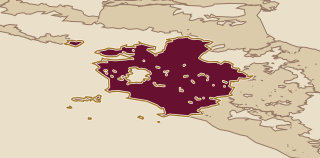
Montalcino is a hilltop town in southern Tuscany, and the Brunello di Montalcino denomination covers the slopes and plateau surrounding it. The southwestern sector, where Argiano stands, runs warmer and drier than the cooler, more maritime-influenced northeastern face. At 350 metres on the plateau, the estate escapes the floor-level heat without losing the long growing season needed for Sangiovese to build the tannin and concentration Brunello demands.
Brunello di Montalcino is a single-variety appellation: only Sangiovese, called Brunello locally, may go into the wine. The DOCG requires a minimum of five years ageing before release, at least two of those in oak casks. Argiano's position on the southwestern plateau, combined with the calcareous marl soils underfoot, pushes the wine toward the mineral and herb-edged character that distinguishes this corner of the denomination from richer, fuller styles produced elsewhere on the hill.
In the cellar
Vineyards and cellar
Argiano farms 42 hectares of Sangiovese across the central-northern section of the estate, with Vigna del Suolo as the historic reference point. The Pedro Parra soil study separated the blocks by clay content, pH, and parent rock, which changed how the team approached irrigation, canopy management, and harvest timing in each section.
In the cellar, fermentation runs 20 to 21 days of skin contact with indigenous yeast. After malolactic conversion in cement tanks, the wine goes into large-format oak casks of 1,000, 2,000 and 3,000 litres for 3.5 years. These large vessels allow slow, controlled oxidation without transferring oak flavour to the wine. The wine retains its fruit and herb character through a long ageing cycle, emerging with the tannin integration that Sangiovese from calcareous marl soils builds over time rather than from new wood. No small barrique ageing, no toasted oak character.
Wines to know
The range in view
Brunello di Montalcino is the estate's primary wine and the one that anchors the range commercially and editorially. Made entirely from Sangiovese aged in large casks, it is released after the mandatory minimum ageing period with the additional time Argiano adds through its 3.5-year cask program. The 2018 vintage is the current reference: a wine with the mineral, herb-edged character typical of the southwestern plateau, built on firm tannin from calcareous marl soils and extended skin contact.
Rosso di Montalcino sits below Brunello in the range hierarchy. The appellation allows earlier release and a shorter ageing period, making it the more immediate expression of Sangiovese from the estate. Production details for Argiano's Rosso are not available from confirmed sources and cannot be described further here.
A useful way in
A bottle to begin with
Start with the Argiano Brunello di Montalcino. The 2018 is the reference vintage but the choice holds across the estate's current direction: Sangiovese from a 350-metre calcareous marl plateau, fermented with indigenous yeast, aged 3.5 years in large casks, and released with the tannin integration and mineral depth that the southwestern corner of Montalcino produces. It is not a soft or approachable wine in the early years; open it two hours before a meal or lay it down for another five. Rose, cherry, wild herb and a long chalky finish.