
Why it matters
The producer
Angelini Paolo farms 40 hectares of Monferrato vines and produces around 100,000 bottles per year. The estate's range is broadly regional, with one exception. Arbian Grignolino del Monferrato Casalese spends longer in the cellar and requires more from the vineyard than the other wines. It is also based on a grape that most of eastern Piemonte had largely stopped taking seriously.
The estate has been in the Angelini family since Paolo Angelini founded it in 1922. Mauro joined the operation in 2004, and his brother Franco followed in 2016. The estate also began working with an oenologist in 2015. These developments marked a more ambitious phase for the winery. Both brothers are fourth generation. The main range includes Barbera d'Asti, Chardonnay, Syrah, and Albarossa. These wines cover the commercial range of a working Monferrato estate. The Arbian is made under a separate programme.
Place and vineyards
Where the wines begin
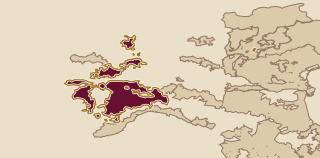
Monferrato is a large hilly wine zone in eastern Piemonte, between the Po valley to the north and the Ligurian Apennines to the south. Within it, Monferrato Casalese is the sub-zone centred on the town of Casale Monferrato. The sub-zone gives its name to the Grignolino del Monferrato Casalese DOC appellation.
Grignolino is a native Piemontese grape, long cultivated in this eastern corridor and almost nowhere else. It produces pale garnet wines with tannin and acidity well above what the colour predicts. This combination made it a local staple and a hard sell beyond the region for most of the twentieth century. The grape's natural tannin and acidity are central to Monferace, the collective Angelini joined in 2015.
In the cellar
Vineyards and cellar
The Arbian Grignolino begins fermentation in temperature-controlled stainless steel tanks on indigenous yeasts, without added cultured strains. Maceration runs for 15 days. This period extracts the tannin and colour present in Grignolino while preserving the grape's natural acidity.
After fermentation, the wine moves into 500-litre French oak tonneaux for a minimum of 36 months. The 500-litre format limits the influence of oak and avoids the vanilla and spice associated with smaller barrels. It also allows slow oxidation and development over three years. The wine then spends 12 months in bottle before release. Total time from harvest to shelf is at minimum four years.
Wines to know
The range in view
The range has two parts. The commercial tier includes Barbera d'Asti in two versions, Jenerosa and Adamant. It also includes Chardonnay under the label A te che sei, Syrah as Nesy, and Albarossa as Ecate. Technical documentation for these wines is limited.
The Arbian Grignolino del Monferrato Casalese is made under the Monferace protocol. The collective sets the ageing requirement and production standard. The wine is pale garnet in colour, which is natural for Grignolino and does not indicate a light wine. Its tannin is firm and drying, and its acidity is high. Four years in tonneaux and bottle give the texture a more integrated character. Cherry, iron, dried herbs, and a faintly bitter finish on the back palate are characteristic notes of aged Grignolino from calcareous Monferrato soils.
A useful way in
A bottle to begin with
The Arbian Grignolino del Monferrato Casalese is the bottle to begin with. It follows the Monferace protocol, with high acidity, firm and drying tannin, dried cherry, iron, and herbal dryness. The wine is pale garnet, with dried cherry and iron on the nose and a long chalky finish. It spends four years from harvest to release.