
Why it matters
The producer
A 1782 document describes "a house with a cellar located in Lugana in the Sermion district known as the place of the Friars." That document is where Ca' dei Frati gets its name, and where its traceable history begins. In 1939, Felice Dal Cero arrived from Montecchia di Crosara near Verona and moved into that same property in Lugana di Sirmione. Thirty years later, his son Pietro did something more consequential than farming: he helped write the legal framework that turned Lugana into a recognized DOC appellation, then bottled the first wine under the new designation.
Ca' dei Frati is one of the largest producers in Lugana, an appellation the family helped define. Pietro died in 2012; the estate is run today by his wife Santa Rosa and their three children, Igino, Gian Franco, and Anna Maria.
Place and vineyards
Where the wines begin
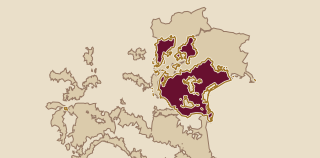
Lugana DOC straddles the administrative border between Lombardy and Veneto, but Ca' dei Frati sits in Lombardy's Sirmione commune, at the southern tip of Lake Garda. The geography matters for the wine. Lake Garda is the largest lake in Italy, and its southern shore generates persistent thermal breezes that cool the vineyards through the growing season and slow ripening enough to preserve acidity in the grapes.
The soils here are heavy clay, a moraine deposit laid down by glacial retreat. Clay holds water well and warms slowly in spring, which pushes Turbiana toward later ripening and a longer growing arc. The combination of clay soils and lake breezes gives Lugana whites their characteristic freshness: citrus and almond on the nose, a mineral edge on the palate, and enough acidity to carry the wine through several years in bottle.
In the cellar
Vineyards and cellar
Turbiana is a medium-sized, thick-skinned grape, and the estate's cellar work is built around what that skin thickness allows. Thick skins mean more phenolic material, more body, and better resistance to oxidation during fermentation. Ca' dei Frati uses that to build wines at three different ageing points from the same base grape.
I Frati Lugana is fermented and held on its lees in stainless steel for six months, then rested in bottle for a further two months before release. Lees contact adds texture and a faintly creamy roundness to the citrus and almond character without adding any oak or sweetness. I Frati Lugana is fresh and mineral, with notes of almonds and citrus fruits.
Wines to know
The range in view
The range is anchored by three Lugana DOC whites built from the same Turbiana grape and the same clay-and-lake-breeze site, differentiated by cellar treatment and ageing time.
I Frati Lugana DOC is the estate's volume wine and its clearest statement of place: stainless steel, six months on lees, citrus-forward, mineral, with a clean acid line and the slightly nutty almond character Turbiana carries natively. Drink it young.
A useful way in
A bottle to begin with
I Frati Lugana DOC is the first bottle. It is Turbiana grown on the clay soils of Lugana di Sirmione, fermented in stainless steel and held on its lees for six months, with no oak and no reserve ageing. That combination, grape character undisguised by wood, lees texture without richness, and Lugana's lake-cooled acidity kept intact, gives you the purest read on what this appellation and this grape can do. The almond and citrus on the nose are specific to Turbiana; the mineral finish comes from the clay; the clean, mouth-watering acidity comes from the lake breezes off Garda. One bottle, three geographic and viticultural causes, all legible in the glass.