
Why it matters
The producer
Marinella Camerani runs Corte Sant'Alda from a hillside above Mezzane di Sotto, a village in the eastern Valpolicella hills. No other estate in the Veneto carries both organic and biodynamic certification. That distinction is not an accident of geography or scale. It is the product of a specific decision Camerani made in the mid-1980s when she took over her family's vineyard and chose to reorient the whole operation around soil health rather than cellar technology.
The estate covers 22 hectares spread across three separate properties, farming the classical Valpolicella grape blend of Corvina Veronese, Corvinone, and Rondinella, plus Garganega for white Soave. The range runs from the lightest fresh Valpolicella through Ripasso to Amarone and the sweet Recioto. In 2024, Gambero Rosso named Camerani Winemaker of the Year for its Vini d'Italia guide, citing her as one of the greatest interpreters of Valpolicella's historical wines. A first recognition came from the same guide around 2008. Forty years of committed biodynamic farming separates those two citations.
Place and vineyards
Where the wines begin
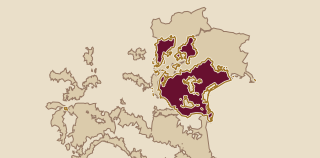
Valpolicella sits in the hills north and northwest of Verona, where the Lessini foothills drop toward the Adige plain. The eastern Valpolicella, sometimes called Valpolicella Est or Valpantena, runs through the Mezzane and Illasi valleys. It sits outside the classic Valpolicella Classico boundary to the west, but the elevation, clay-limestone soils, and diurnal temperature swings push the same grape varieties toward brighter acidity and slightly more aromatic freshness than the warm valley floors closer to Lake Garda.
Within this zone, Corte Sant'Alda's three properties span from roughly 350 to 600 metres. The main estate headquarters sits at around 350 metres above Mezzane di Sotto. Adalia occupies a western slope. Podere Castagné reaches up to 600 metres, a significant altitude for Valpolicella, where slower ripening preserves the acidity that keeps the appellation's wines from feeling heavy despite their concentration.
In the cellar
Vineyards and cellar
All fruit across the three properties is hand-harvested. For the fresh Valpolicella tier, grapes go directly to fermentation, preserving the light, cherry-fresh character that the grape blend produces at its most natural. For the Ripasso, the base wine undergoes a second fermentation on the pressed skins left over from Amarone or Recioto production. This refermentation adds weight, dark fruit concentration, and tannin to the wine without the full drying cycle that defines Amarone.
Amarone requires appassimento: after harvest, selected grape clusters are laid on bamboo racks and dried for approximately 90 to 120 days. The grapes lose a significant portion of their water weight, concentrating sugars, phenolics, and flavour compounds before pressing and fermentation begin. The process demands careful air circulation and temperature management to prevent mould and to achieve even drying across the clusters. The resulting wine ferments slowly under the weight of its own sugar concentration, finishing dry at high alcohol.
Wines to know
The range in view
The range moves in a logical sequence from freshness to concentration.
Valpolicella DOC is the lightest wine, fermented from whole fresh Corvina-led grapes. It carries cherry fruit, light body, and moderate tannin. Drinkable young, it captures the grape blend at its most accessible and most aromatic. This is a wine for immediate pleasure, not long ageing.