
Why it matters
The producer
Marinella Camerani makes wine in the Valpolicella Classica hills west of Verona, where the original and most regarded parcels of the appellation sit above the valley floor. Gambero Rosso named her Winemaker of the Year in the Vini d'Italia 2024 guide, a judgement grounded in decades of farming the same 19 hectares without compromise. Corte Sant'Alda carries both organic and Demeter biodynamic certification, a combination found nowhere else in the Veneto. The estate produces the four wines that define the Valpolicella hierarchy: a fresh Classico, a structured Superiore, the Campi Magri Ripasso, and an Amarone. The Ripasso is the wine most people come to first, and it earns that position.
Place and vineyards
Where the wines begin
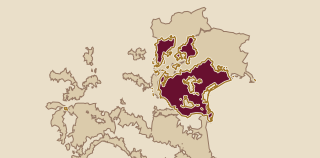
Valpolicella Classica is the historical core of the broader Valpolicella appellation, a zone of parallel valleys cut into limestone and volcanic hills running northwest from Verona. The Classica designation identifies the original hillside communes: Negrar, Marano, Fumane, Sant'Ambrogio, and San Pietro in Cariano. Wines from this zone carry the Classico suffix on the label, marking them as coming from the steeper, cooler hillside plots rather than the expanded flatland vineyards added to the appellation in the 1960s. The climate is continental with strong lake influence from Lake Garda to the west, moderating summer heat and extending the growing season into autumn. That longer season matters for Corvina Veronese, the dominant grape: it ripens late and rewards the extra hang time with the cherry and dried-fruit character that defines the style.
In the cellar
Vineyards and cellar
All vines are farmed under Demeter biodynamic protocol, the certification that goes further than organic by requiring a complete farm organism: preparations applied on a lunar calendar, cover crops managed as part of the ecosystem, no synthetic inputs of any kind. Camerani lets grass grow between the rows at heights that would prompt a neighbour to reach for the mower. She reads that grass as a measure of root health rather than as disorder. Deeper roots mean the vines draw from a larger soil column, which translates into more complex, more mineral fruit at harvest.
Wines to know
The range in view
The range runs across four appellation levels and reflects the full Valpolicella hierarchy.
The Valpolicella Classico is the everyday wine: Corvina-led, light-bodied, with the bright cherry acidity and leafy character typical of the hillside Classica zone. It ferments and bottles young, built for drinking rather than cellaring.
A useful way in
A bottle to begin with
The Vigneto Campi Magri Valpolicella Superiore Ripasso is the bottle that shows what Corte Sant'Alda does. It is a Ripasso, which means a Valpolicella base wine refermented on the dried-grape pomace of the Amarone harvest, picking up tannin, dried-fruit depth, and body in the process. What separates this bottle from most Ripasso is the freshness: cherry pie aromas with floral and leafy overtones, then a rich, earthy palate that stays lifted through a long finish.