
Why it matters
The producer
Marcalberto farms Pinot Nero and Chardonnay on medium to high elevation hillsides across three communes in the Alta Langa zone: Santo Stefano Belbo, Calosso, and Cossano Belbo. Every bottle is Metodo Classico, the Traditional Method used in Champagne, in which secondary fermentation and lees ageing occur inside the bottle itself. The estate makes four wines under the Alta Langa DOCG and releases around 30,000 bottles a year.
What sets the cellar apart is conviction about process. First fermentation happens in used French oak barrels. Extended lees ageing takes place in historic underground cellars. Nothing is filtered. Nothing is clarified. The resulting wines carry texture and autolytic depth that most Alta Langa producers do not pursue.
Place and vineyards
Where the wines begin
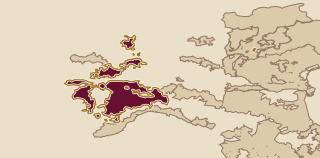
Alta Langa is a high-altitude zone in the southern Langhe hills of Piemonte, distinct from the Barolo and Barbaresco country to the north. The DOCG, formalised in 2011, was built around Metodo Classico sparkling wine from Pinot Nero and Chardonnay planted above 250 metres. The hillsides impose natural acidity and slower, more even ripening on both grapes, which translates to the high acid backbone and measured fruit weight that Metodo Classico wines need to age on lees without losing life.
Marcalberto's vineyards span three communes. Santo Stefano Belbo is the winery's home village. Calosso and Cossano Belbo extend the holdings across different slope aspects. Exact parcel locations are not specified publicly, but the elevation sits in the medium to high range the DOCG requires. On the label, every bottle carries the Alta Langa DOCG designation, which tells a buyer they are looking at a geographically defined, high-altitude Piemontese sparkling wine from these two grapes.
In the cellar
Vineyards and cellar
Marcalberto uses a Coquard marmonnier wooden press, a type of press long established in Champagne and, the estate states, the only one operating in Italy. Gentle pressing matters at this stage: whole-cluster or carefully handled fruit pressed slowly and softly extracts juice without phenolic harshness, keeping the base wine clean and the eventual mousse fine.
First fermentation goes into used French oak barrels. The oak is not new, so it adds no vanilla or toast; what it does is allow micro-oxygenation during fermentation, which builds texture and a rounder mid-palate without masking the grape or the acid. The Blanc de Blancs splits its fermentation between steel tanks and used oak to preserve Chardonnay's brightness alongside that textural depth.
Wines to know
The range in view
The range holds four wines, all Metodo Classico under the Alta Langa DOCG.
The Blanc de Blancs is 100% Chardonnay, classified Pas Dosé at 12.5% alcohol with 1.9 g/l residual sugar. Fermented partly in steel tanks and partly in used French oak, it shows fine and persistent bubbles, straw yellow colour with golden reflections, and aromas that lean toward toasted hazelnut and bread crust rather than fresh fruit. On the palate it is fresh and agile, with a firm acid line that the Pas Dosé classification keeps unmasked by dosage sweetness.
A useful way in
A bottle to begin with
Start with the Blanc de Blancs. It is 100% Chardonnay, Pas Dosé, fermented partly in steel and partly in used French oak barrels, and aged on lees in the historic underground cellars before release. The wine makes the estate's cellar choices immediately legible: the hazelnut and bread-crust aromatics come from lees contact and the oak fermentation, the fine mousse from gentle pressing in the Coquard wooden press, and the dry, clean finish from the Pas Dosé classification at 1.9 g/l residual sugar. There is no sweetness to soften the picture. Alta Langa's altitude gives the Chardonnay its fresh, firm acidity, and the cellar work builds texture on top of that without adding weight.