
Why it matters
The producer
In 1998, Stefano Cottini bought out his father's small vineyard in Fumane and began making wine under the Scriani name from the first harvest. Fumane sits at the centre of Valpolicella Classica, the historic western arc of the Valpolicella denomination, and it is hillside territory: Monte S. Urbano and La Costa are the two principal parcels, planted to Corvina, Corvinone and Rondinella on slopes above the valley floor.
The estate is built around appassimento, the technique of slowly drying harvested grapes in ventilated lofts before fermentation. Scriani applies it at two intensities: a shorter drying cycle for Carpanè, a partially dried red, and a much longer one for Amarone della Valpolicella, the flagship. Amarone has grown faster than any other wine in the range across the past several years and now anchors the estate commercially. In 2014 Cottini added a second territory by acquiring 15 hectares of morainic hillside near Lake Garda, expanding into white wine appellations with no previous connection to Scriani. The estate produces around 110,000 bottles annually across both territories.
Place and vineyards
Where the wines begin
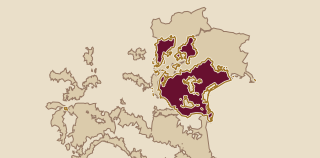
Fumane is a village in the Valpolicella Classica zone, the denomination's westernmost and most historically regarded strip. Classica distinguishes itself from the broader Valpolicella Denominazione di Origine Controllata by its hillside positions and older planting history. The classification matters for Amarone because the hillside sites in Classica produce the grape concentration that appassimento drying requires: fruit picked from lower, flatter ground cannot survive three months of drying without losing aromatics rather than gaining them.
Scriani's Valpolicella Classica parcels are on Monte S. Urbano and La Costa, two hillside positions above the Fumane valley. The Lake Garda territory operates on different soils and a different climate register, with the morainic glacial hills producing white varieties suited to the Custoza, Lugana and Pinot Grigio appellations. The two territories share the Scriani label but have separate ranges: one is a hillside red specialist built around appassimento, the other is a white wine expansion on a different landscape entirely.
In the cellar
Vineyards and cellar
Vineyard work across both territories is handmade: no mechanised harvesting, daily attention to the vines through the growing season.
For Carpanè, harvested Corvina grapes go into the fruit cellar for approximately 30 days of natural over-ripening. Fermentation then runs for roughly 25 days in 50-hectolitre oak truncated conical barrels. The large-format vessels moderate extraction and allow gentle oxygenation during a long ferment. Maturation continues in both barriques and larger oak vessels.
Wines to know
The range in view
The Valpolicella Classica range is built around two red wines differentiated by how long the grapes spend drying before fermentation.
Carpanè sits in the middle of the range. Corvina grapes dry for 30 days, producing a wine with more body and dried-fruit concentration than a straightforward Valpolicella but without the full weight of Amarone. Ruby in colour, it opens with flowers and fresh berries, and the moderate drying adds density without pushing the wine into the richly extracted territory of the flagship.
A useful way in
A bottle to begin with
Amarone della Valpolicella is the bottle to start with. It carries every step of what Scriani does: hillside Corvina, Corvinone and Rondinella from Fumane, three months of fruit-cellar drying, a month of skin fermentation without added yeast, and ageing in 350-litre barriques. Deep ruby to garnet, it opens on concentrated jam, dried cherry and berry, and the palate builds through vanilla, liquorice and spice to a finish of bitter almonds and firm tannin. This is Amarone as the appellation intends it: dense, long, and structured for time in the cellar rather than early drinking. Carpanè is the accessible step-in, but Amarone is where the estate's choices in vineyard and cellar are fully visible.