
Why it matters
The producer
Visintini is a biodynamic family estate in Corno di Rosazzo, a hillside commune tucked into the southeastern corner of Friuli-Venezia Giulia near the Slovenian border. Andrea Visintini founded it in 1973. In 2002, his son Oliviero and twin daughters Cinzia and Palmira took over, and the estate has stayed a three-sibling operation since. The hectare count sits somewhere between 24 and 35 across three Friulian DOC zones, and the farming is certified biodynamic.
The bottle that marks the estate out is the Pinot Grigio Ramato. Ramato, from the Italian word for copper, names an old Friulian method: Pinot Grigio grapes left briefly on their grey-pink skins, long enough to pull colour and a little weight from the contact. The result looks nothing like the pale straw wine that most of the world calls Pinot Grigio. Visintini kept making it through the decades when commercial producers abandoned the technique for lighter, faster styles. That choice is the clearest signal of where the estate stands.
Place and vineyards
Where the wines begin
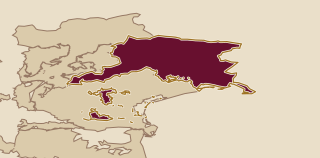
Corno di Rosazzo sits on gently folded hills in the far southeastern reach of Friuli-Venezia Giulia, part of the broader arc of hillside vine country that runs from the Slovenian frontier toward the Adriatic plain. The commune falls within the Colli Orientali del Friuli DOC, a hillside appellation that stretches across the eastern slopes of Friuli and takes in a wide range of white and red varieties.
The hills around Corno di Rosazzo are composed largely of flysch, a compressed alternating sequence of sandstone and marl that crumbles and weathers into well-draining, mineral-rich soils. Flysch is the geological signature of much of the Colli Orientali del Friuli and Collio hillside country, and it is closely associated with the aromatic lift and mineral edge in the white wines produced here. The fractured stone drains freely, limiting vine vigor and concentrating flavour in the grapes.
In the cellar
Vineyards and cellar
Vines at Visintini are farmed biodynamically across the three DOC zones. Biodynamic viticulture bans synthetic herbicides, pesticides, and fertilisers, replacing them with herbal and mineral preparations timed to lunar and plant-growth cycles. In the vineyard, the practical consequence is a living soil with stronger root systems, lower crop levels per vine, and grapes with more concentrated flavour and thicker skins.
The Pinot Grigio Ramato involves skin contact after harvest, producing its copper-pink colour and adding a layer of weight and grip to what would otherwise be a pale, fresh white. What is confirmed: the wine is dry on release, carries fruit concentration consistent with careful vineyard work, and delivers acidity that holds the palate clean.
Wines to know
The range in view
Visintini produces whites across three DOC designations. The Colli Orientali del Friuli wines are the estate's core, with the Pinot Grigio Ramato as the most distinctive label in the range.
The Pinot Grigio Ramato (Colli Orientali del Friuli DOC) is a skin-contact white vinified from Pinot Grigio grapes with enough maceration to give the wine a coppery-pink tint. It is dry and fruit-driven, with pear, nectarine, and ripe stone fruit on the nose, a sleek citrus edge, and a juicy acid line through the palate. The finish is clean and lightly grippy, where the skin contact leaves a trace of texture without weight.
A useful way in
A bottle to begin with
Start with the Pinot Grigio Ramato, Colli Orientali del Friuli DOC. It is a dry, copper-pink white from Pinot Grigio grapes given skin contact, farmed biodynamically on the hills above Corno di Rosazzo. The nose delivers ripe pear, nectarine, and citrus; the palate is fruit-forward, dry, and carried by juicy acidity, with a texture on the finish that comes from the skin contact rather than from oak or sweetness. It is not a heavy wine. It tastes like a Pinot Grigio that chose to stay itself rather than become something easier to sell.