
Why it matters
The producer
The Bisol family has been making wine in Valdobbiadene since 1542. That figure is not marketing shorthand; it is the oldest documented date for continuous wine production by the family in the hills above Treviso, and the brand carries it plainly as Bisol1542. The current winery is run by two brothers: Gianluca Bisol as president and Desiderio as winemaker. In 2014 they sold a 50% stake to Grupo Lunelli, the Trentino group that also owns Ferrari sparkling wines, while keeping full operational and creative control.
The holdings are large by the standards of steep Prosecco country: nearly 190 acres of vineyard farmed across the Valdobbiadene zone, from younger two-year plantings to vines that are eighty years old. Production runs to 250,000 cases a year. Those numbers matter because the terrain they sit on is not easy ground. The hillside parcels require close to 900 hours of hand labor per hectare per year, a figure that sets the floor for how much the wine costs to make before a single bottle is filled.
Place and vineyards
Where the wines begin
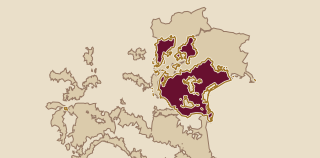
Valdobbiadene is a zone in the Veneto foothills northeast of Venice, where the Dolomite foothills meet the flat Piave plain. The town of Valdobbiadene gives its name to the DOCG, and the sub-zone of Valdobbiadene Prosecco Superiore covers the steep hillside parcels that form the historical heart of Prosecco production. Within that zone, Santo Stefano di Valdobbiadene is one of the named communes that regularly appears on bottles as a mark of more specific origin.
The terrain is the dominant fact about this place. Slopes steep enough to preclude mechanization, east and south-facing exposures that accumulate warmth through the growing season, and altitude variations that preserve cool nights and slow ripening. Glera grown here keeps higher acidity than Prosecco from the flatter DOC zones, and the wine reflects that: lighter in body, more floral, with a fresh finish rather than weight.
In the cellar
Vineyards and cellar
All Bisol vineyards are farmed by hand. On the steepest parcels, where gradient makes tractor work impossible, every harvest pass and canopy operation is done manually, which is why the labor count runs to 900 hours per hectare annually. The vine age spread from two to eighty years means the estate is continuously replanting while maintaining the old-vine parcels that produce smaller berries and more concentrated juice.
In the cellar, the Martinotti method, also called the Charmat or tank method, is used for Jeio Brut. The wine undergoes its secondary fermentation in sealed stainless steel tanks for a minimum of 30 days. This preserves the Glera grape's primary fruit character and natural aromatic lift more directly than bottle fermentation would, which is appropriate for a wine meant to be fresh rather than aged. Crede undergoes lees aging before its second fermentation, adding texture and a light savory depth to the mineral base.
Wines to know
The range in view
The range moves in three clear steps. Jeio Brut is 100% Glera fermented under the Prosecco DOC, the appellation that covers a wider geographic area outside the DOCG hills. The Martinotti method and stainless steel tank fermentation keep the wine clean and immediate: fine, lively carbonation, citrus fruit on the nose, saline minerality, and a refreshing palate. It is the most widely distributed bottle in the range and the entry point into the estate.
Crede Brut is the estate's signature wine and carries the Valdobbiadene Prosecco Superiore DOCG designation. The blend is 85% Glera and 15% Chardonnay, the Chardonnay adding stone-fruit weight and floral complexity alongside Glera's natural acidity. Crede was among the first brut Prosecco Superiore wines released in the zone, at a time when the market expectation was for extra-dry sweetness. The wine is dry, mineral-driven, with white flower aromatics, a mid-palate of stone fruit, and a firm acid line into the finish.
A useful way in
A bottle to begin with
Crede Brut Valdobbiadene Prosecco Superiore DOCG is the bottle that shows what Bisol's hillside farming and blend philosophy produce together. The wine is 85% Glera from crede-soil parcels in the DOCG zone, with 15% Chardonnay added for stone-fruit weight. Lees aging before the second fermentation gives it a texture and depth that the tank-fresh Jeio does not attempt. The nose is white flower and stone fruit, the palate mineral and dry with a firm acidity that keeps the wine fresh through the glass. No sweetness, no oak. Start here to understand why brut Prosecco Superiore is a different proposition from the extra-dry style that still dominates much of the category.