
Why it matters
The producer
Bodega Aranleón is an organic estate on the western edge of the Utiel-Requena appellation, beside the Cabriel river where the plateau sits high enough above the Mediterranean coast to cool the harvests considerably. Paco and Maria Sancho acquired the property in 2000, inheriting a stone cellar that had been built in 1927. They farmed around 300 acres of organic vineyard, built a new facility around the old foundations in 2006, and made their first bottle under the Solo label in 2003.
The estate centres on Bobal, the indigenous red grape of Utiel-Requena, paired with Macabeo for a Cava. Two bottles, one snail logo, one consistent argument: that this inland corner of Valencia produces something distinct from the coastal wines the region is better known for.
Place and vineyards
Where the wines begin
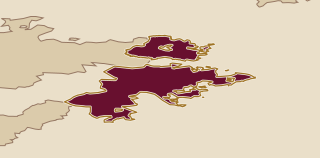
Utiel-Requena is an inland appellation west of the city of Valencia, separated from the coastal D.O. Valencia zone by the mountains of the Iberian system. The plateau sits between 700 and 900 metres. At that altitude, summer days are hot but nights drop sharply, slowing ripening and preserving the natural acidity that would otherwise cook out of the grapes on the coast. The result in the glass is a red with more lift and freshness than the Mediterranean latitude alone would suggest.
Bobal is not grown here as a secondary choice. It is the appellation's defining variety, cultivated for generations as the workhorse red of the Valencian interior. Old bush vines, low yields, and dark fruit with firm acidity are the default character of the grape when it is grown at elevation and handled carefully.
In the cellar
Vineyards and cellar
The estate grows Bobal as its primary red variety across the high-altitude parcels of western Utiel-Requena. Bobal is harvested by hand. The fruit is received at the winery and moved by gravity rather than pump, which reduces physical stress on the grape skins and limits extraction of harsh phenolics before fermentation begins. Fermentation takes place in temperature-controlled vats, giving the cellar control over the pace of extraction and the preservation of primary fruit aromas.
Solo Red is aged in oak after fermentation. The oak softens the natural grip of Bobal tannins without removing the grape's characteristic colour depth and dark fruit. Macabeo for the Solo Cava Brut is handled to preserve freshness: lees ageing in the tank builds texture and a fine, persistent bead.
Wines to know
The range in view
The public range is two bottles.
Solo Red is 80% Bobal and 20% Syrah, certified organic, 14% alcohol. Bobal brings the colour, the dark plum and blackberry fruit, and the firm mid-palate weight. Syrah adds a thread of pepper and grip to the finish. Oak ageing smooths the frame without obscuring the grape. The tannins are rounded rather than angular, making the wine approachable young while the underlying fruit depth gives it some ability to develop over three to five years.
A useful way in
A bottle to begin with
Solo Red is the right first bottle. It is Bobal at its clearest: 80% of the grape that defines this appellation, grown organically at altitude, handled by gravity in a cellar that has been here since 1927, and aged in oak just long enough to smooth the edges. The wine is dark, rounded, and soft-tannined, with plum and blackberry fruit and enough freshness from the plateau altitude to keep it from feeling flat. At 14% alcohol it is full without being overwhelming. Start here to understand what Bobal grown in the Valencian interior can produce and what a patient, low-intervention cellar does with it.