
Why it matters
The producer
Bodega Asensio Carcelén makes wine in Jumilla, an appellation in Murcia in southeastern Spain, and it does so almost exclusively from one grape. Monastrell accounts for 90% of production. The remaining 10% is split evenly between Syrah and Garnacha Tinta. This is not indecision about what to plant; it is a declaration about where the family believes Jumilla's character lives.
Four generations of the Carcelén family have farmed here. The current operation is led by Juan Carcelén Gilar. The winery obtained full organic certification by the end of 2011, making it one of the earlier commitments to certified organic viticulture in the appellation. That date counts: organic conversion in a hot, semi-arid growing region requires consistent investment in soil health and canopy management at precisely the moment when irrigation-fed conventional farming was expanding elsewhere in Murcia.
Place and vineyards
Where the wines begin
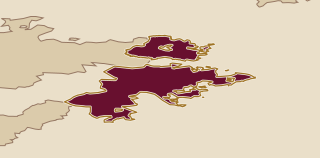
Jumilla is a landlocked appellation in Murcia, roughly 80 kilometres northwest of the Mediterranean coast, sitting on a high plateau where the altitude moderates what would otherwise be extreme summer heat. Vines grow at between 600 and 900 metres above sea level. The combination of thin, chalky soils, low rainfall, and intense sun produces the conditions Monastrell has adapted to over centuries: deep-rooted bush vines that reach moisture without irrigation, concentrated fruit from small berries, and alcohol levels that routinely push into the mid-to-high teens.
The Jumilla DO label on a bottle means the wine was grown in this plateau interior, away from the Atlantic and Mediterranean moderating influences that shape cooler Spanish appellations. The label consequence is direct: expect ripe, dark fruit and body rather than freshness and delicacy. Monastrell from Jumilla is built for warmth.
In the cellar
Vineyards and cellar
The vineyards are 95% dry-land, meaning no supplemental irrigation beyond natural rainfall. Bush vines pruned in the traditional gobelet manner sit low to the ground, concentrating heat from the chalk soil and shading their own fruit. Hand-harvesting is standard across the estate. In a hot climate with thick-skinned grapes like Monastrell, harvest timing and the care of the picking crew directly affect the tannin quality and fruit freshness of the finished wine.
Organic farming since 2011 covers the vineyard management practices: no synthetic inputs, certified under Spanish organic standards. The cellar detail for individual cuvées is not documented with enough specificity to describe here.
Wines to know
The range in view
The range centres on Monastrell. The grape accounts for nine bottles out of every ten that leave the winery, with Syrah and Garnacha Tinta sharing the remaining production in equal parts.
The 100 x 100 Monastrell is a single-variety red grown and made under the Jumilla DO. The 2018 vintage is 100% Monastrell, carries organic certification, and comes in at 15% alcohol. That figure is typical for ripe Monastrell from Jumilla's plateau: the grape's thick skins and the appellation's intense summer sun drive sugar accumulation before the harvest window closes.