
Why it matters
The producer
Xurxo Alba came back to his father's vines in Salnés in 2006, after studying viticulture, and did something the family had never done: put the wine in a bottle with their name on it. What had been a bulk-selling operation, growing Albariño and passing the fruit to other producers, became Bodegas Albamar.
The bodega sits within a family cluster in the Salnés subzone of Rías Baixas, the Atlantic-facing DO in Galicia, sharing its address with a restaurant and artisanal food shop. Xurxo farms 10 hectares directly and sources fruit from 48 small growers across 13 additional hectares. The entire range is Albariño, shaped by coastal exposure and split by fermentation philosophy: clean and saline at one end, reductive and mineral at the other.
Place and vineyards
Where the wines begin
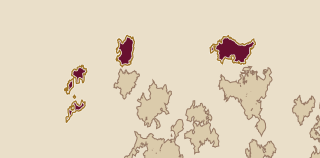
Rías Baixas is the DO covering the Atlantic-influenced vineyards of Galicia, a green, wet, ocean-facing region in northwest Spain where Albariño is the only grape that matters at volume. Salnés is its most productive and most coastal subzone, a low-lying area of river estuaries and sea inlets where Atlantic winds arrive with salt and moisture.
The proximity to the water is not incidental. Xurxo has observed that a vineyard facing the sea and one 400 or 500 metres inland produce noticeably different fruit. Coastal exposure keeps ripeness moderate and acidity firm. The Atlantic air is present in the finished wine: the saline edge and mineral character that run through the Albamar range come directly from where the vines stand.
In the cellar
Vineyards and cellar
Xurxo farms 10 hectares directly. Estate vines are 30 to 40 years old, trained in pergola systems, and grown on sandy coastal soils in Salnés. The pergola lifts the canopy to manage the humidity that Atlantic conditions bring; it also allows hand harvesting and selective picking across the vine.
The flagship Albamar is fermented in stainless steel, which preserves the grape's direct fruit and saline freshness without adding textural complexity. PAI uses both stainless steel tanks and large oak vessels without added yeast. The oak does not mark the wine with wood flavour; it adds breadth and texture. O Sebal comes from the untreated experimental vineyard and undergoes natural fermentation. The absence of winery intervention creates a reductive character: the struck-match, lees-driven nose that the other bottles in the range do not carry.
Wines to know
The range in view
All three bottles are 100% Albariño. The range is separated by site and cellar method, not by hierarchy or village.
PAI takes the same Albariño foundation and ferments it in stainless steel tanks and large oak vessels without added yeast. The oak adds weight without wood flavour: a broader mouthfeel, a slightly rounder texture, more body than the flagship. Stone fruit and coastal minerality remain central; the acidity is firm rather than cutting.
A useful way in
A bottle to begin with
The flagship Albamar Rías Baixas Albariño is the right first bottle. It is made from 30 to 40 year old vines on Salnés sandy soil, fermented clean in stainless steel, and shows the coastal Albariño character without any winemaking overlay: stone fruit, saline mineral edge, and a precise, persistent acidity. It is what the Salnés coast tastes like when nothing gets in the way.