
Why it matters
The producer
Bodegas BSI has farmed Jumilla since 1934, when hundreds of vineyard partners pooled their holdings into a single cooperative bodega. That collective arrangement still defines the estate today. BSI draws on partner growers across the appellation, and the limestone soils under those vines carry ungrafted Monastrell roots that predate the phylloxera era. The bodega holds the largest area of such vines within the Jumilla D.O.P., a distinction that shapes both the farming calendar and what ends up in the bottle.
The working motto is blunt: Grandes Agricultores, Grandes Vinos. Good farming first. The range runs from everyday Monastrell to the Gémina tier, where the oldest ungrafted parcels supply the fruit and French oak handles the ageing.
Place and vineyards
Where the wines begin
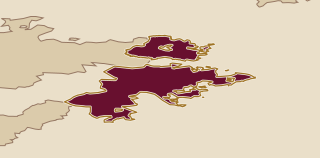
Jumilla sits inland in the Murcia region of southeast Spain, far enough from the coast for the climate to be genuinely continental. The summers are long and hot; the winters are cold enough to matter. Vines here must cope with drought, and the limestone soils that cover much of the appellation have rewarded Monastrell rather than varieties that need more moisture and cooler air.
The name Jumilla also appears on the D.O.P. label, tying the bodega's address to an appellation built almost entirely around one grape. For BSI, that connection runs deeper than the label: the cooperative's ungrafted vine parcels sit on the same limestone that kept those roots alive when phylloxera swept through European vineyards.
In the cellar
Vineyards and cellar
The Gémina Cuvée Selección is drawn entirely from Monastrell grown on ungrafted European root vines older than forty years. After harvest, the grapes undergo a short maceration in stainless steel to extract colour and tannin, then proceed through malolactic fermentation before moving to oak. The Cuvée Selección spends eight months in new American and French oak barrels, long enough for the vanilla and spice of new wood to integrate with the grape's dark fruit.
The Gémina Monastrell follows the same maceration and malolactic route but leaves oak after three months, giving a lighter touch of wood before bottling. The difference in barrel time between the two Gémina wines is the clearest dial in the cellar: the ungrafted fruit is the constant, and the oak programme separates the bottles.
Wines to know
The range in view
The range divides into two tiers with distinct jobs. The Genus line covers entry-level Jumilla Monastrell and rosé, offering the grape's dark fruit character with modest oak influence. The Celia Rosé Monastrell is a young wine made from the same grape in a pink, fruit-led style with salmon colour and fresh character.
The Gémina tier is where the ungrafted vine material and the oak programme converge. Gémina Monastrell takes the three-month route through oak, keeping more of the grape's primary dark fruit and firm tannin visible. Gémina Cuvée Selección goes deeper into the programme: eight months in new American and French oak, a very intense red colour, and a palate that shows ripe dark fruit layered with spice, light oak and a toasted edge. The Gémina line also includes a Chardonnay bottled under the Jumilla appellation. The two Gémina reds are the bodega's clearest statement of what old ungrafted limestone Monastrell can do at different oak depths.
A useful way in
A bottle to begin with
Gémina Cuvée Selección is the bottle that shows what BSI is building at the top of the range. It is 100% Monastrell from ungrafted vines over forty years old, raised for eight months in new American and French oak. The colour is very intense red. The nose brings ripe dark fruit, light oak, spice and a toasted touch; the palate is smooth, the tannins mature, the finish long. No other bottle in the range combines the oldest ungrafted parcels with the full eight-month barrel programme.