
Why it matters
The producer
Bodegas Delampa works Monastrell at the upper edge of what Jumilla can do with altitude. The vineyards sit at 900 metres on a dry inland plateau in Murcia, dry-farmed on stony, nutrient-poor soils that push the vines deep and concentrate what little water falls. Three wines carry that fruit from vine to bottle: an unoaked entry-level Monastrell built on fresh red and black fruit, a six-month roble crianza called Éxodo that layers spice and roasted coffee into riper black fruit, and a 12-month wood-aged flagship called Delampa 50 Años that lengthens and savours everything the grape produces at this altitude.
The house has been family-owned across three generations since Julián Santos Martínez founded it in 1921. The stone bodega facade, which Julián built by hand in 1923, still stands at the winery entrance.
Place and vineyards
Where the wines begin
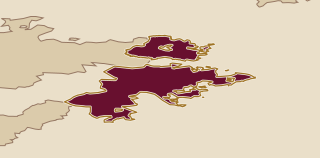
Jumilla is a landlocked D.O. in the Murcia region of southeastern Spain. It sits on a high inland plateau, far from any coastal moderating influence, where summer heat is intense and rainfall is scarce. Monastrell is the dominant red grape throughout the appellation because the variety is thick-skinned, drought-tolerant, and capable of producing deeply coloured, densely fruited wines under these conditions.
Delampa's vineyards at 900 metres sit above the Jumilla valley floor. The altitude shaves summer temperatures enough to preserve the acidity and aromatic lift that lower-lying Monastrell vineyards lose to heat. In the glass, that difference reads as freshness against ripe fruit weight, the cherry and raspberry aromatics of the entry-level Monastrell sitting lighter than the dark fruit density typical of hotter-farmed examples from the same appellation.
In the cellar
Vineyards and cellar
Dry-farming at 900 metres means the vines carry a naturally low crop load. Without supplemental water, each plant produces fewer grapes, and those grapes arrive at harvest with tighter skins and more concentrated pulp. The stony soils drain fast and reflect heat onto the canopy, advancing ripening without cooking the fruit.
In the cellar, the three tiers of the range reflect three distinct decisions about oak contact. The entry-level Monastrell sees no wood, which keeps the cherry, raspberry, and blackberry aromatics vivid and direct. Éxodo Roble spends six months in a combination of American and French oak barrels before bottle-ageing, which softens the tannins and draws out layers of roasted coffee and nutmeg alongside the ripe black fruit. The 50 Años flagship extends oak contact to 12 months, integrating wood and fruit into a longer, more savorous whole.
Wines to know
The range in view
Delampa Monastrell is the entry tier, unoaked, built around fresh aromatics of cherry, raspberry, and blackberry. Red and black fruit sit at the centre of the nose; the palate is enveloping and direct, with no oak character to interrupt the grape. It is a clear statement of what Monastrell produces at this altitude when nothing is added in the cellar.
Éxodo Roble is the mid-tier crianza, aged six months in American and French oak. The aromatic profile builds on the fruit base with roasted coffee, nutmeg, and a layered spice note. The tannins are described as approachable rather than grippy, and the finish is persistent. The combination of American and French oak gives the wine breadth without heaviness.
A useful way in
A bottle to begin with
Start with the Delampa Monastrell. It is unoaked Monastrell from dry-farmed vines at 900 metres, which means nothing in the cellar interrupts what the vineyard does. The nose delivers cherry, raspberry, and blackberry directly; the palate is soft and enveloping. No wood, no correction, no additional weight from oak tannin. If you want to know what Jumilla Monastrell at altitude tastes like before any cellar decisions are layered on top, this is the wine to open first.