
Why it matters
The producer
Bodegas Godeval operates from a converted 12th-century monastery called Xagoaza in the Sil River valley, in Valdeorras, the easternmost appellation of Galicia. The winery makes one grape and nothing else: Godello, across four distinct bottlings that span from a fresh, stainless-steel entry wine to a barrel-aged reserve. Founded in 1986, Godeval was the first estate to bottle a commercial monovarietal Godello at a time when the grape was only just returning to the vineyards of the region. Araceli Fernández, whose father Horacio founded the estate, has run the winery since 2006. In October 2025, Zamora Company, the Spanish drinks group behind Ramón Bilbao and Mar de Frades, acquired a majority stake.
Place and vineyards
Where the wines begin
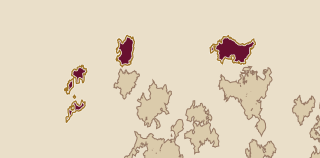
Valdeorras sits in the far eastern corner of Galicia, where the Sil River cuts through a canyon landscape of steep slate hillsides and granite outcrops. The valley channels Atlantic moisture from the west while blocking the worst of the rainfall, giving growers more sun hours than the coast and a longer, drier growing season that allows Godello to ripen fully without losing its acid spine. The soils shift between slate and sandy granite depending on the zone, and the slate parcels in particular leave a mineral imprint on the wines, a dry, almost stony quality on the palate that runs through every bottling Godeval produces. The Valdeorras DO is the place on the label; Godello is the grape that defines what goes inside it.
In the cellar
Vineyards and cellar
Godeval's oldest parcels supply the Cepas Vellas bottling, a selection from vines that bring lower yields and more concentrated fruit than younger plantings. Those grapes are fermented in stainless steel and held on their lees for five months without malolactic fermentation, a combination that builds texture and weight while keeping the acidity fully intact. The absence of malolactic conversion means the wine retains a firm, mouth-sharpening freshness even as the lees contact rounds the mid-palate.
The Revival bottling draws from the old Pancho vineyard and uses cryomaceration, a technique that chills the grapes before fermentation begins. Cold maceration at this stage extracts aromatic compounds from the skins without the harsh tannins that heat would pull out, and it has citrus and herbaceous notes that do not appear in the lees-aged wines.
Wines to know
The range in view
Godeval's four wines are all 100% Godello and share the same Valdeorras DO appellation, but each targets a different expression of the grape.
Godeval is the entry-level wine, made from younger estate vines, fermented in stainless steel, and bottled for early drinking. It is the clearest, most direct version of Godello from the estate: citrus-forward, fresh, with light body and no lees or oak influence to complicate the picture.
A useful way in
A bottle to begin with
Start with Cepas Vellas. It comes from the oldest vines on the estate, spends five months on its lees in stainless steel, and skips malolactic fermentation entirely, keeping both the texture and the acidity fully present. The wine opens with ripe apple, melon, and a touch of pineapple, and underneath those fruit notes runs a stony, saline mineral quality that comes from the slate parcels where the vines grow. The mid-palate is fuller and more textured than the entry Godeval but carries no oak, so nothing stands between the grape and the slate. The finish is long and dry, with a firm acid line that keeps the wine feeling alive rather than heavy.