
Why it matters
The producer
Bodegas Hnos. Pérez Pascuas sits in Pedrosa de Duero, a village in Burgos, on land that Mauro Pérez had farmed before his sons ever made wine. In 1980, brothers Benjamín and Adolfo Pérez Pascuas brought in their first harvest from those family vineyards. Two years later, they joined the handful of producers who formally applied to create the Ribera del Duero DO, an appellation that did not yet exist and whose commercial future nobody could confirm. The designation was granted in 1982. The bodega was present at both moments: the first bottle and the legal founding of the appellation.
The estate grows Tinto Fino across vineyards where a high proportion of vines are around 30 years old, plus the Pago Valtarreña parcel, where 70-year-old vines planted by Mauro Pérez produce the flagship Gran Selección. All wines are estate-grown and sold in more than 35 countries.
Place and vineyards
Where the wines begin
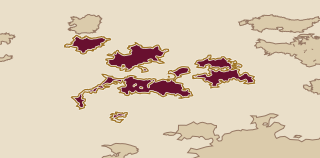
Ribera del Duero runs east to west through the high Castilian plateau, following the course of the Duero river through Burgos and Valladolid. The vineyards sit at elevation, with wide swings between summer heat and cold nights, and winters sharp enough to shut the vines down completely. That continental climate is what gives Tinto Fino here its particular character: dark fruit from the summer warmth, firm acidity from the cold nights, and tannins that can carry a wine through extended ageing without losing shape.
Pedrosa de Duero lies toward the Burgos end of the appellation. The altitude moderates ripeness, which is why the wines at this address tend toward weight rather than sweetness, with enough acidity to keep the fruit moving on the palate over years in bottle.
In the cellar
Vineyards and cellar
The estate's vine base is largely around 30 years old, which at Ribera elevations and on limestone-clay soils means moderate yields and concentrated dark fruit. Pago Valtarreña's 70-year-old vines produce even lower yields, with greater berry concentration and deeper colour.
The Viña Pedrosa Reserva spends 24 months in a mix of American and French oak barrels, then a minimum of 20 months in bottle before release. American oak brings vanilla and toasted coconut character; French oak adds dried spice and tighter grain. The combined ageing integrates tannin and builds the kind of body that needs time but rewards it. The Gran Selección and Gran Reserva follow similarly extended programmes, though specific durations are set by vintage.
Wines to know
The range in view
The range runs seven bottles from the Cepa Gavilán Crianza at the base to the Gran Selección at the top. The Crianza is the accessible entry point: Tinto Fino with short barrel time, drinking well within a few years of release. The El Otero is the organic anomaly, carrying a small percentage of white Albillo and red Garnacha alongside the Tinta del País, giving it silky tannins and a lively balance between fruit freshness and toasted oak.
The Finca La Navilla Reserva and Viña Pedrosa Reserva both sit at the reserva tier, with the Viña Pedrosa the more documented of the two: 100% Tinto Fino, 24 months in barrel, 20 months in bottle, firm tannin, dark cherry, structured body. The Viña Pedrosa Gran Reserva extends the ageing from the same estate Tinto Fino base, adding tobacco, dried fruit, and leather to the oak and dark cherry profile as time in bottle does its work.
A useful way in
A bottle to begin with
Start with the Viña Pedrosa Reserva. It is 100% Tinto Fino from estate vineyards, aged 24 months in American and French oak and then held a minimum of 20 months in bottle before release. That ageing programme is long enough to integrate the tannins fully while keeping the dark cherry and plum fruit clear on the nose. In the mouth, the tannins are enveloping rather than grippy, the body is full but not heavy, and the finish carries toasted oak, dried spice, and enough acidity to keep the whole thing moving.