
Why it matters
The producer
Bodegas Murviedro sits in Requena, a hilltop town on the high inland plateau of DO Utiel-Requena, about 70 kilometres west of Valencia's coast. The winery was founded in 1927 as the Spanish operation of the Swiss Schenk Group, a European wine company established in Switzerland in 1893. For most of its first seven decades it operated under the Schenk corporate name, supplying wine from the plateau's Bobal vineyards into broader distribution channels. In 2002, on its 75th anniversary, it adopted the name Bodegas Murviedro.
The name change was not cosmetic. It marked a deliberate turn toward branded estate production, with Bobal as the central argument. Today the winery farms many of its vineyards organically, produces vegan wines without animal-derived fining agents, and holds certified-organic status across select product lines. The flagship Sericis range leads the quality tier, topped by a Cepas Viejas Bobal from old vines on chalk-clay soils.
Place and vineyards
Where the wines begin
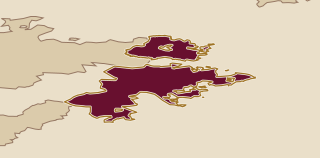
DO Utiel-Requena occupies an elevated meseta in the province of Valencia, at altitudes between 700 and 900 metres above sea level. The inland position and the height together produce a continental climate inside what is otherwise a Mediterranean country: hot days, cool nights, and winters sharp enough to force the vines into genuine dormancy. The diurnal range protects natural acidity in the grapes at a latitude where flat coastal vineyards would lose it.
Requena is the main town of the denomination and the centre of Bobal cultivation. Bobal is a native thick-skinned red grape, high in anthocyanins, adapted to the plateau's dry summers and stony soils. It produces wines with deep colour and firm tannic grip. Murviedro also holds certification in DO Alicante to the south, extending its reach beyond the Utiel-Requena plateau.
In the cellar
Vineyards and cellar
Bobal from the Medio Dia parcels is fermented at controlled temperatures, then undergoes malolactic fermentation to soften the acidity and round the palate. For Sericis Cepas Viejas, the wine then ages eight months in new French Allier oak barrels. Allier oak, from the forests of central France, contributes vanilla, toast, and gentle spice at a finer grain than American oak; eight months is enough to add those cedar and toasty notes without overwhelming Bobal's dark-fruit core.
Across many vineyards, Murviedro has moved to organic cultivation using biodynamic methods, avoiding synthetic herbicides, pesticides, and fertilisers. The winery also recycles glass and cardboard and operates a modern filtration system. Vegan winemaking eliminates egg white, casein, and other animal-derived fining agents at every stage.
Wines to know
The range in view
Bobal drives the red and rosé ranges. The grape's thick skins give the wines their deep, almost inky colour and the firm, grippy tannins that define the palate. At entry level, Bobal from Utiel-Requena delivers dark cherry, bramble, and dried herb. The Sericis tier sharpens that fruit into a more concentrated register: old vines on chalk-clay soils produce lower yields, and the resulting wine is denser, with plum and dark bramble fruit, a spice edge, and toasty oak from the Allier barrels. The tannins on Sericis Cepas Viejas are firm but woven in rather than raw.
Merseguera whites from the plateau are lighter in body, aromatic, and shaped by the altitude's cool nights. Murviedro also produces Cava, the Spanish sparkling wine with its own national denomination. Certified-organic lines run across several tiers of the range. Specific wine names beyond Sericis Cepas Viejas Bobal are not confirmed in the verified sources.
A useful way in
A bottle to begin with
Sericis Cepas Viejas Bobal is the bottle. It is 100% Bobal from old vines on the Medio Dia chalk-clay soils of Utiel-Requena, fermented at controlled temperature, through malolactic fermentation, and aged eight months in new French Allier oak. The wine puts the plateau's distinctive grape, its native soils, and the winery's cellar decisions in one glass: concentrated dark fruit, integrated toasty oak, firm chalk-supported tannins, and a finish with mineral length. Start here to understand what Bobal from high-altitude Utiel-Requena can be.