
Why it matters
The producer
Four generations of the Piqueras family have made wine in Almansa, a dry inland appellation in Castilla-La Mancha, southeastern Spain. The estate grows Monastrell, Garnacha Tintorera, and Syrah on organically farmed vineyards that include old ungrafted vines, those that escaped the phylloxera louse that swept through European wine country in the late nineteenth century and forced almost every producer on the continent to regraft onto resistant American rootstocks. The Piqueras range runs from short-aged blends designed for fruit and colour to single-variety wines that spend months in oak.
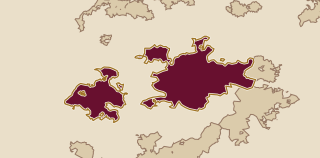
Almansa sits inland and at altitude, drier and more extreme in temperature than the coastal Mediterranean vineyards to the east. The appellation is built around Monastrell and the rare Garnacha Tintorera. It is not a name most wine buyers encounter first, which makes the Piqueras bottles a discovery rather than a confirmation.
Place and vineyards
Where the wines begin
Almansa DO occupies the southeastern corner of Castilla-La Mancha, where the Meseta plain gives way to higher ground before dropping toward the Valencian coast. The elevation moderates what would otherwise be punishing summer heat, keeping acidity in the grapes and lengthening the growing season into autumn. Harvest runs late: the Old Brick Factory Syrah is picked in late October to reach full ripeness.
The appellation label on a Piqueras bottle places the wine in this specific dry, elevated, inland world. Monastrell grown here produces deeply coloured, thick-skinned grapes with ripe dark fruit and enough tannin to carry oak ageing. Garnacha Tintorera, one of the few red-fleshed grape varieties grown in Spain, adds ink-dark colour when blended. Syrah arrived as a complement and now appears as a standalone wine.
In the cellar
Vineyards and cellar
The ungrafted old vine parcels feed the Los Losares Pie Franco Monastrell. The cellar ages this wine in large 5,000-litre casks rather than the small 225-litre barriques standard in many regions. At five thousand litres, the wine sits in contact with a much smaller proportion of oak surface relative to volume, which means the wood contributes almost nothing to the flavour. The Monastrell character comes through: deep colour, dark fruit, the grape itself rather than the barrel.
The Black Label blend takes Syrah and Monastrell through a fermentation calibrated to hold colour and preserve fruit aromatics, then spends four to six months in barrel. Short enough ageing to stay fruit-forward, long enough to soften and integrate.
Wines to know
The range in view
The Black Label is a Syrah and Monastrell blend, the fruit-forward entry into the range. Short barrel ageing keeps the dark fruit vivid, the colour deep, and the tannins soft enough for early drinking. The Monastrell brings density; the Syrah adds a cooler, spicier aromatic register.
Los Losares Pie Franco Monastrell comes from the ungrafted old vine parcels. The 5,000-litre cask ageing gives the wine room to settle without picking up oak flavour. Los Losares Pie Franco Monastrell is aged in large 5,000-litre casks.
A useful way in
A bottle to begin with
The Old Brick Factory Syrah is the right first bottle. It is 100% Syrah from old vines, aged nine months in new French oak, harvested in late October for full ripeness in the elevated Almansa vineyards. The wine gives you the Piqueras house approach in a single glass: ripe fruit from the climate, oak influence, and a mineral clay note that comes from the soil rather than the cellar. Black currant and dark plum on the nose with five spice and clay mineral notes. Toast and spice come from nine months in new French oak. The old vines contribute tannins. Priced accessibly for what it delivers. Open it an hour ahead.