
Why it matters
The producer
The bodega sits on Avenida de Murcia in the town of Jumilla, founded in 1925 by a family that has never moved the operation and never sold it. Silvano García, the third-generation owner, trained as an oenologist at La Escuela de la Vid before taking over the winery. He also chairs the Jumilla DOP Regulatory Council, a post he has held since 2019 and was re-elected to unanimously in April 2023. That dual role, running one of the appellation's centenary producers while setting the quality rules for every winery in Jumilla, is unusual anywhere in Spain.
Monastrell is the house grape. It drives the red wines, the rosé, and the Vermut Rojo. A Moscatel-based white rounds out the range. Six in ten bottles leave Spain, landing primarily in Germany, Belgium, the Netherlands, China, and the United States.
Place and vineyards
Where the wines begin
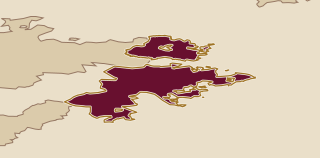
Jumilla is a landlocked appellation on a high plateau in Murcia, southeastern Spain, sitting between roughly 400 and 800 metres above sea level. The DO was established in 1966 and is almost entirely built around Monastrell, a thick-skinned red grape that suits the continental climate: hot, dry summers, cold winters, and very little rain. That aridity historically kept phylloxera away from Jumilla's vineyards, and some ungrafted old vines survive as a result.
The altitude moderates what would otherwise be an extreme climate. Daytime heat builds colour and ripe dark fruit in Monastrell; the cold nights slow ripening enough to preserve acidity, which matters particularly for the rosé and lighter expressions. On the label, Jumilla means Monastrell, and the grape's range runs from the inky red wines the appellation built its export reputation on to the pale strawberry-toned rosé that the bodega now sells across four continents.
In the cellar
Vineyards and cellar
Vineyard hectarage and specific parcel holdings are not confirmed in the verified fact set. What is confirmed is the grape range: Monastrell for the reds, rosé, and vermouth base; Moscatel for the white. The bodega uses both French and American oak barrels, held in a barrel room that also functions as an event space. The 4 Meses red, a Monastrell aged four months in barrel, takes its name directly from that élevage period: four months of wood contact gives the wine enough tannic frame to carry the grape's dark fruit without adding heavy oak flavour.
Quality control runs from vineyard delivery through bottling. Guided tours and tasting courses are part of the visitor offer, alongside the Aroma Room, a dedicated scent library of 43 aromas drawn from white, rosé, and red wines.
Wines to know
The range in view
The range is built around Monastrell in three forms and completed by one Moscatel white.
Silvano Garcia Pink is a Monastrell rosé at 12% ABV. The grape gives a pale wine with red berry and citrus fruit character, residual sugar of 1.0 g per 100ml, and enough acid to keep it fresh when served chilled between 8 and 10 degrees. The fruit registers as ripe strawberries, blood orange, raspberry gel, and mint: a warm-climate rosé with enough freshness to avoid weight.
A useful way in
A bottle to begin with
Start with the Silvano Garcia Pink. It is a Monastrell rosé at 12% ABV, made from the grape that defines Jumilla, in the style that shows the variety's lighter, fresher face. The fruit is ripe strawberry and blood orange with a raspberry gel character, the mouth is clean and dry despite the fractional residual sugar, and the finish carries a cool herbal note. Serve it cold. It explains what the plateau and the grape produce when the aim is freshness rather than extraction, and it is the clearest entry into a bodega that runs from rosé to vermouth on the same variety.