
Why it matters
The producer
Bolla is a large commercial wine house in Valpolicella Classica, based in San Pietro in Cariano in the province of Verona. It operates 188 hectares of vineyards across the Veneto and owns what it credibly calls a founding role in Amarone: in 1953, Bolla was the first producer to bottle and sell the wine commercially, turning a wine made only for domestic consumption into a named, purchasable category.
The house now sits within Gruppo Italiano Vini, which completed its acquisition in 2006. Scale is large and the range is broad, but the Amarone history is real. The cellar in Pedemonte, known as the Cantina del Nonno, holds Slavonian oak barrels that date to the 1883 founding year, sitting alongside 1,700 barriques and 35 large wooden tonneaux added over the following century.
Place and vineyards
Where the wines begin
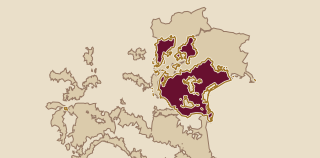
Valpolicella Classica is the western core of the Valpolicella wine zone, the area around the communes of Negrar, Marano, Fumane, Sant'Ambrogio, and San Pietro in Cariano, immediately northwest of Verona. The label "Classica" distinguishes this historic zone from the extended Valpolicella DOC that expanded outward in the 1960s. Grapes grown here carry the Corvina, Corvinone, and Rondinella mix that underpins every wine in the Valpolicella hierarchy, from fresh Valpolicella Classico through ripasso to Amarone.
The zone is also the legal home of Amarone della Valpolicella DOCG, the dried-grape wine that requires a minimum 100-day appassimento drying period. That requirement is not incidental. It determines how the grapes are harvested, how the cellar is designed, and how the wine tastes: concentrated, full-bodied, dry despite the sugar accumulated through drying, and built for long ageing. Bolla's winery at Pedemonte sits within this Classica heartland, which means both the Amarone and the ripasso wines carry the Classico designation on their labels.
In the cellar
Vineyards and cellar
For Amarone, the harvest is done entirely by hand. Pickers select clusters carefully in the vineyard before transport to the drying rooms. There the grapes are laid in shallow, ventilated crates and left to dry for a minimum of 100 days. Over that period, water evaporates, sugar concentrates, and the fruit develops the dried, jammy, and spiced character that defines Amarone. The grapes lose roughly 30 to 40 percent of their weight before pressing.
Fermentation on concentrated must of this kind requires long maceration and careful temperature control to convert high sugar into dry wine rather than leaving residual sweetness. The wine then moves into wood. The Cantina del Nonno holds the oldest cellar layer: Slavonian oak barrels from 1883, wide-format and lightly imparting, alongside 1,700 barriques and 35 large tonneaux added across the following decades. The barriques bring more oxygen contact and gentle wood integration for the younger tiers; the large old barrels handle the reserve ageing for Le Origini.
Wines to know
The range in view
Bolla builds its range across four tiers, all rooted in Corvina, Corvinone, and Rondinella.
Valpolicella Classico is the lightest expression: unappassimento fruit, cherry-forward, soft in tannin and body, made for early drinking.
A useful way in
A bottle to begin with
Le Poiane Valpolicella Ripasso DOC Classico Superiore is the right first bottle. It is Corvina, Corvinone, and Rondinella taken through the ripasso method: a second fermentation on Amarone pomace that lifts the body, deepens the fruit, and adds spice without the full weight and price of Amarone. The 2020 opens garnet-edged red, carries ripe cherry, plum, vanilla, black pepper, and tobacco on the nose, and delivers silky tannins and fresh acidity on a long finish. The bottle shows how appassimento and pomace contact are used in Valpolicella wines.