
Why it matters
The producer
Cantina Sociale Colli Fiorentini is the world's largest Chianti producer, and it is a cooperative. That combination is not common in Italian wine. The cantina sits in Montespertoli, a hill town roughly 25 kilometres southwest of Florence, and draws fruit from approximately 350 member farming families cultivating around 1,500 hectares across the Florentine hills. Those families process over 8 million kilograms of Sangiovese-led grapes each year, vinified entirely on solar-generated energy. The scale is industrial in number but agricultural in origin: every kilogram arrives from a family farm, not a corporate estate.
The cooperative produces wine under the Chianti Colli Fiorentini DOCG, a sub-zone appellation in the broader Chianti family with its own legal designation, distinct from Chianti Classico to the south. Labels in the range include Valvirginio, Rifugio del Vescovo, and Belledaisy. An independent wine guide lists the cantina among the best producers of the region.
Place and vineyards
Where the wines begin
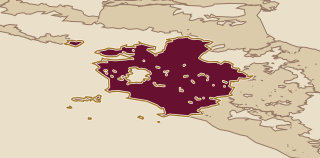
Montespertoli sits in the Florentine hills between Florence and the Arno valley, at the northern edge of Chianti territory. The Chianti Colli Fiorentini sub-zone covers a sweep of hillside land between the city and the classic Chianti Classico heartland further south, with vineyards at varying altitude and aspect across the ridgelines and slopes around the town.
The appellation name states something direct: Colli Fiorentini means Florentine hills, and the denomination covers the wine-growing land that historically supplied Florence rather than Siena. It holds DOCG status as its own sub-zone, not a lesser bracket under the main Chianti umbrella. Chianti Classico, centred on Greve and Radda, is a separate DOCG with different geographic and regulatory boundaries. The Colli Fiorentini wines are Sangiovese-led, as Chianti law requires, and the altitude of the hillside sites gives the fruit a growing season that leans toward moderate warmth, retained acidity, and the kind of tannin that Sangiovese builds on clay and galestro soils.
In the cellar
Vineyards and cellar
The cooperative model concentrates 1,500 hectares into a single production stream, which means that fruit selection and blending are the primary tools for managing quality. Member families farm their own plots and deliver grapes to the cantina at harvest. The diversity of sites across the Florentine hills means the cooperative has access to fruit from varying altitudes and exposures, and the blend that becomes Chianti Colli Fiorentini DOCG draws from that range.
Sangiovese dominates, as the appellation requires. The variety ripens to moderate alcohol in the Florentine hill climate and carries the acidity and tannin that carry Chianti through food. No specific certified organic or biodynamic farming status has been confirmed across the membership, though the renewable energy commitment in the cellar signals an orientation toward sustainable production.
Wines to know
The range in view
The cooperative's range is built around the Chianti Colli Fiorentini DOCG appellation, with Sangiovese as the required foundation variety. Within the designation, producers may blend in permitted red varieties alongside Sangiovese, and wines may be labelled as Chianti Colli Fiorentini or released at the Riserva level after extended ageing. The Riserva category requires a minimum of two years ageing before release, which in a Sangiovese-dominant wine typically translates to firmer tannin and a more integrated mid-palate relative to the younger release.
Labels in the range include Valvirginio, Rifugio del Vescovo, and Belledaisy. The volume across all labels runs to millions of bottles annually, making these wines accessible in price relative to smaller Tuscan producers working the same grape.
A useful way in
A bottle to begin with
The Chianti Colli Fiorentini DOCG Riserva indicates at least two years of ageing before release, which rounds the Sangiovese tannin enough to drink without a long decant while keeping the acid line.