
Why it matters
The producer
Albino Armani has been making wine in Veneto since 1607, a founding claim that places the company among the oldest documented wine producers in Italy. Today it runs five cellars across three Italian territories, but its most singular work happens in the flatlands of the Venetian plain, under the Casa Belfi label.
Casa Belfi is a biodynamic project built in partnership between Albino Armani and winemaker Maurizio Donadi. It produces natural, unfiltered, Glera-based frizzante wines in the zone where Prosecco is grown, and it holds Demeter certification, the internationally recognised standard for biodynamic agriculture. As of 2016, Casa Belfi was the only Prosecco producer in the entire Venetian flatlands to carry that certification. The amphora wine it produces is the only skin-contact amphora frizzante from the zone.
Place and vineyards
Where the wines begin
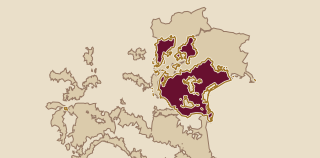
Glera is the white grape of the Prosecco zone, grown across a wide arc of northeastern Veneto, from the foothills of the Dolomites down into the flat alluvial plains that spread between Treviso and Venice. The flatland parcels are the less fashionable part of that geography: Prosecco's prestige is concentrated in the hillside Conegliano Valdobbiadene DOCG zone, where slopes, chalk, and morning mist supply the conditions most associated with the grape's perfumed freshness.
Casa Belfi sits in the plains. Growing Glera there, without the hillside advantage of drainage and diurnal temperature swing, places a different demand on farming. The soils are heavier, the growing conditions less naturally forgiving, and the yields more difficult to manage toward intensity. The decision to farm without pesticides on that terrain, and to seek Demeter certification, is a more difficult commitment in the flatlands than in the hills.
In the cellar
Vineyards and cellar
Casa Belfi vines grow without pesticides on the Venetian flatlands. The soil work uses biodynamic preparations: nettle and horsetail decoctions supply silica and mineral nutrition; chamomile adds calcium; all applications follow the Demeter calendar rather than reactive chemical logic.
In the cellar, the approach is minimal. The Naturalmente Frizzante is sealed in bottle in spring, when residual sugars trigger a second fermentation by native yeasts already present in the wine. Carbon dioxide produced by that fermentation becomes the natural mousse. The yeast settles to the bottom of the bottle, where it slowly breaks down, releasing compounds that add body and longevity to the wine. Nothing is filtered out and nothing is clarified.
Wines to know
The range in view
The Casa Belfi range has two confirmed expressions.
Casa Belfi Naturalmente Frizzante Bianco is 100% Glera. It ferments naturally in bottle during spring, when native yeasts complete the alcoholic fermentation in the sealed vessel, producing fine bubbles from within the wine rather than from external carbonation. The colour is straw yellow. The nose carries citrus and bread-crust notes, the character that comes from Glera's mild fruit and the yeast activity during bottle fermentation. Acidity is lively and balanced. Yeast sediment on the bottle floor softens the texture over time and gives the wine more longevity than its price suggests.
A useful way in
A bottle to begin with
Casa Belfi Anfora is the bottle to start with. It is 100% Glera from biodynamic flatland parcels, macerated on the skins in terracotta vessels, bottled unfiltered and unclarified without added sulphites. In the glass it pours an intense cloudy yellow with fine persistent bubbles. The skin contact gives it body and a dry, mineral edge that ordinary Prosecco-zone Glera does not have; the amphora contributes a porous, oxygen-touched texture without oak flavour. Nothing about it looks or tastes like commercial Prosecco. Start here to understand what biodynamic farming and minimal cellar work actually change in a glass of Italian frizzante.