
Why it matters
The producer
The cellars of Marchesi di Barolo stand in the village of Barolo itself, below the Renaissance castle of the Marchesi Falletti. This is the building where the modern style of Barolo wine was first produced, in the early nineteenth century, when the grape was transformed from a sweet, sparkling drink into the full-bodied, dry wine the appellation is now built around. That origin is not a marketing note. It is a physical address: the same underground chambers, the same village, the same Nebbiolo from the Langhe hills.
Pietro Abbona bought the historic cellars from the Falletti family in 1929, after the aristocratic line ended without an heir. His great-grandson Ernesto and Ernesto's wife Anna took over direction in 2006. Their children Valentina and Davide now work alongside them, making the Abbona family the fifth and sixth generations to keep the estate in continuous production.
Place and vineyards
Where the wines begin
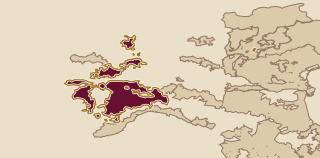
Barolo is a village and an appellation. The village sits in the Langhe, the chain of hills south of Alba in southern Piemonte, where the Nebbiolo grape reaches its most complex form. The appellation of Barolo covers eleven communes, and within that geography the Cannubi cru is one of the most historically regarded single vineyards: a central, gently sloping hill in the heart of the zone, prized for producing wines of aromatic depth, firm acidity, and tannins that soften with age.
The estate's vineyards spread beyond Barolo into Barbaresco, the Nebbiolo appellation to the northeast of Alba; Roero, across the Tanaro river on sandier soils; and Monferrato Nicese to the east, where other varieties fill the range. Each zone changes the label, the permitted grape, and the wine's character. Barolo and Barbaresco are both Nebbiolo, but the soils and elevations differ, and the ageing requirements under Italian law are distinct.
In the cellar
Vineyards and cellar
Across the estate, herbicides are not used. The choice is both agronomic and a condition of the SQNPI certification, which requires integrated production practices across the whole holding. Working without herbicides keeps the vine root systems competing with grass cover, which limits vigour, concentrates the fruit, and reduces the risk of chemical residues in the wine.
In the cellar, five centuries-old large oak casks remain in continuous active use. These are not decorative. The casks are maintained constantly and filled each vintage. Large old oak contributes very little direct oak flavour to the wine; its function is slow, controlled oxidation over an extended ageing period. The tannins integrate gradually, and the aromatic range deepens from primary fruit toward the rose, spice, tar, and herbal notes that mark aged Nebbiolo.
Wines to know
The range in view
The range moves from early-drinking blends to a single-vineyard Barolo, with the appellation level rising at each step.
Alba Pì Cità is a co-fermented blend of Nebbiolo and Barbera from the Alba appellation. Co-fermentation means the two grapes go into the vat together, and the Barbera contributes soft tannin and direct red fruit that counterbalances the Nebbiolo's natural austerity. The wine is designed for early drinking: open, fresh, light on its feet.