
Why it matters
The producer
Fiorenzo Franceschi makes four red wines from the Corvina-dominant grape set that has defined Valpolicella for generations. Each wine uses a different technique to extract more from the same three or four native varieties: conventional oak ageing, partial appassimento, re-fermentation over Amarone lees, and full appassimento with two years in barrel. The range is an argument made in wine about what drying grapes can and cannot do, and where to stop.
The entry wine, Amicale, is a straightforward Corvina, Rondinella, and Molinara blend at 14% alcohol, oak-touched and approachable. The Amicone Rosso pushes into different territory by drying a portion of the harvest on wooden racks before fermentation, a practice called appassimento. The Ripasso Superiore borrows concentration from Amarone production rather than drying grapes a second time. The Amarone is the full commitment: all grapes dried, two years in oak, the appellation's most intensive style.
Place and vineyards
Where the wines begin
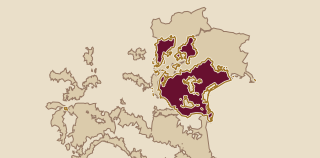
Valpolicella is a red wine appellation in the western part of the Veneto, northeast Italy, built almost entirely on three native grapes: Corvina, Rondinella, and Molinara. Corvina is the backbone of every wine in the zone, contributing tart cherry fruit, firm acidity, and the capacity to survive drying without losing freshness. Rondinella adds colour and secondary fruit. Molinara lightens the blend and adds lift. Corvinone, a close relative of Corvina, appears in the Amarone blend, where it deepens body and dark fruit character.
No vineyard location or soil data is source-verified for this producer. The wines are produced within the Valpolicella appellation zone in Veneto, where the classical area covers hills north and northwest of Verona. What is confirmed is the drying practice: Amicone Rosso uses wooden drying racks under controlled temperature and humidity, and the Amarone grapes are dried in well-ventilated environments before fermentation.
In the cellar
Vineyards and cellar
Amicale is fermented and aged in oak, producing a wine with developed spice, slight sweetness, and a dark fruit profile that includes raisins and orange peel alongside cherry.
Amicone Rosso follows a more involved cellar path. Grapes are hand-selected and dried on large wooden racks under controlled temperature and humidity. Controlled drying slows water loss and prevents unwanted mould, allowing the grapes to concentrate without oxidising. The partially dried grapes are then fermented in stainless steel, which keeps the wine fresh despite the concentrated fruit, and aged in tonneaux. The smaller oak format gives more wood contact per litre than a large foudre, contributing the toasted oak and dark spice character on the finish.
Wines to know
The range in view
The four wines form a clear progression from lighter to heavier, each shaped by a distinct production decision.
Amicale is the entry wine: Corvina, Rondinella, and Molinara at 14% alcohol, oak-aged, with dark cherries, orange peel, raisins, vanilla, and chocolate on the palate. A slight sweetness and developed spice character run through the wine. It is the most conventionally made of the four and the most accessible.
A useful way in
A bottle to begin with
Start with Amicone Rosso. It is 50% Corvina, 30% Rondinella, and 20% Molinara, partially dried on wooden racks and fermented in stainless steel before tonneaux ageing. The partial drying is the key decision: the grapes spend time losing water on the racks, concentrating colour, sugar, and fruit flavour, but fermentation stops before the wine reaches Amarone weight or alcohol. What you get in the glass is full and velvety, with ripe cherries and dried plums on the nose, dark berry compote and cherry liqueur on the palate, and a finish of toasted oak, soft tannins, and dark spice.