
Why it matters
The producer
Cantine Gregoletto farms 18 hectares of hillside parcels in Premaor di Miane, a village in the Conegliano Valdobbiadene DOCG, and makes wine the way the zone worked before industrialisation rewrote the terms. The family's presence in the Valdobbiadene hills is documented to the 1600s, and the winery carries Luigi Gregoletto's name as a founding mark of Treviso's wine culture. What that history produces in practical terms: a col fondo frizzante still bottled cloudy on its lees, and a Verdiso still white made from the indigenous grape that most of the region abandoned when Glera took over.
Neither wine is fashionable in the way that a new-wave natural label might be. Both are old. The Sui Lieviti frizzante is the ancestral form of Prosecco: unfiltered, unsweetened, alive with residual yeast and bread-crust character. The Verdiso is simply what the hills grew before a single grape codified the appellation. Gregoletto kept both going while the zone around it converted.
Place and vineyards
Where the wines begin
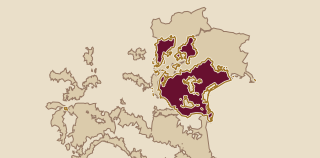
Conelgiano Valdobbiadene DOCG occupies the foothills of the eastern Veneto, where the Alps begin to flatten toward the Adriatic plain. The landscape is steep enough that UNESCO listed it in 2019: narrow hillside strips called ciglioni, hand-tended on gradients that machines cannot reach. Premaor di Miane sits toward the Valdobbiadene end of the appellation, the western flank where the hills are steeper and the Glera parcels sit at medium to high elevation.
Gregoletto's 18 hectares are spread across mid to high hillside positions in the DOCG zone. Verified sources do not specify soil composition for these parcels. The hillside aspect is what shapes the wines directly: slower ripening, higher acidity in the finished Glera, and the need to harvest in stages rather than in a single pass, picking each parcel as it reaches the right point rather than sweeping the whole estate at once.
In the cellar
Vineyards and cellar
Harvest at Gregoletto is done by hand and in stages, working through parcels at different elevations as each reaches the right ripeness rather than harvesting the whole estate at once. That tiered approach affects what goes into each wine: higher parcels pick later and carry higher acidity into the press.
The Sui Lieviti frizzante is made by the col fondo method, also called ancestral method: the wine is bottled before fermentation is complete, so the final fermentation happens in the bottle itself, leaving the yeast sediment inside. There is no disgorgement, no added sweetness, no filtration. The bottle carries everything the fermentation produced. The wine has delicate bubbles and a fresh, savory finish.
Wines to know
The range in view
The range divides into three categories: Prosecco Superiore DOCG sparkling, the Sui Lieviti frizzante, and still wine.
Under the DOCG label, Gregoletto produces three styles from Glera. The Brut is bone-dry with a clean mousse and high acidity from the hillside parcels. The Extra Dry carries a small residual sugar level, the style that built the appellation's reputation: ripe white fruit and mandarin on the nose, apple and pear on the palate, with the grape's aromatic character amplified by the sparkle rather than masked. The Brut Nature is zero-dosage, bottled on its lees in a col fondo approach: drier than the Brut, earthier, with a yeast texture that runs through the whole palate.
A useful way in
A bottle to begin with
Start with Prosecco Sui Lieviti. It is 100% Glera from the Miane hillside parcels, fermented and bottled in the col fondo style without disgorgement, filtration, or added sugar. The bottle arrives cloudy, the sediment visible, the bead soft. Pour it straight and smell the glass before the bubbles dissipate: wisteria, green apple, pear, a yeast breadiness that separates it immediately from everything in the supermarket Prosecco aisle. On the palate it is fresh and savory rather than sweet, the acidity present but not aggressive, the finish clean and dry.