
Why it matters
The producer
Cantine Pirovano makes wine at a scale that most Piemonte producers cannot imagine. Twenty-five million bottles leave the facility each year across the full portfolio, which places the company firmly in the commercial tier of Italian wine production rather than among the small domaine bottlers of Barolo or Barbaresco. Within Piemonte, the main label is Duca di Aleramo, built around Barbera d'Asti DOCG: the grape-forward, high-acid red that the Monferrato hills do well and that Italian tables have drunk for generations.
The company frames its work as a meeting of two things: long experience in Italian wine production and current-generation winemaking technology. That combination shapes a range aimed at consistency and accessibility rather than at single-vineyard depth or cellar complexity. A second label, La Scoperta, is positioned as a fruit-forward entry point into the same appellation, though its sourcing specifics remain undisclosed.
Place and vineyards
Where the wines begin
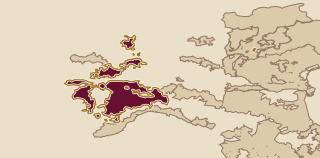
Barbera d'Asti DOCG takes its name from the town of Asti and covers the rolling Monferrato hills that spread east of Turin across the provinces of Asti and Alessandria. The hills provide a favourable microclimate and limestone-rich soils. These conditions support the Barbera grape's combination of ripeness and freshness. Limestone drains well, moderates yields, and keeps acidity from collapsing in the heat of a Piemontese summer. The result in the glass is a wine that stays lively even at full colour saturation.
The DOCG designation was awarded in 2008, separating the best-defined production zone from the broader Barbera d'Asti DOC that had existed before it. The appellation boundary establishes which Monferrato hill vineyards qualify for the stricter classification, with minimum grape standards and production rules attached. That legal boundary matters on the label: a wine carrying Barbera d'Asti DOCG tells you the grapes came from this delimited zone, not simply from Piemonte at large.
In the cellar
Vineyards and cellar
The confirmed vineyard holding associated with Cantine Pirovano is Terre Bentivoglio, named on the company's own platform, though no specifics about its size, grape varieties grown there, or farming practices are publicly detailed. Whether the Duca di Aleramo or La Scoperta wines draw on estate fruit from this holding, purchased Monferrato grapes, or a blend of both is not confirmed.
Cellar details for either label are similarly undisclosed. No information is available about barrel or tank ageing, oak contact, élevage duration, or selection criteria. What the company has confirmed is an investment in current-generation production technology, which at this scale typically means temperature-controlled fermentation, stainless steel vat management, and automated quality monitoring across large lots.
Wines to know
The range in view
The Piemonte range centres on two Barbera d'Asti expressions. Duca di Aleramo Barbera d'Asti DOCG is the main label: a ruby-red wine with violet reflections, cherry fruit, persistent fruit character, and bright acidity from the Monferrato hills. The DOCG classification places it in the upper tier of the Barbera d'Asti production zone, with appellation rules governing grape sourcing, minimum ripeness, and production method.
La Scoperta sits below as an accessible, fruit-led expression of the same grape. It is described as a social wine, prioritising immediate cherry character and approachable acidity over cellar complexity or concentration. Sourcing details for La Scoperta are unconfirmed, so its relationship to the Duca di Aleramo and any differences in viticulture or production are not known.