
Why it matters
The producer
Casa Vinicola Sartori has been in Negrar, one of the five valleys that make up Valpolicella Classica, since Pietro Sartori bought his first barrel in 1898. The family acquired Villa Maria in 1924, a property that already had a vineyard inside its grounds and a dedicated section of drying racks for the appassimento process that defines the region's most serious wines. That infrastructure was not added later as the winery grew; it was already there when they arrived, which says something about how deeply the drying tradition was embedded in Negrar before Amarone had its own appellation name.
Pietro Sartori started in 1898 with a barrel. Twenty-six years later, the family bought Villa Maria, and with it a working arele drying rack that placed them directly inside the appassimento tradition rather than at its margins. Regolo Sartori registered the Cangrande brand in 1934, anchoring the producer's name to a specific Veronese historical figure at a time when wine-region branding was relatively uncommon.
Place and vineyards
Where the wines begin
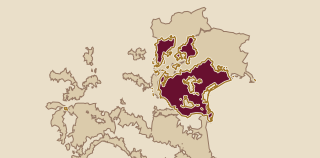
Negrar sits in the western part of Valpolicella Classica, the historic core of the denomination and the area that runs through five valleys carved into the limestone foothills north of Verona. The Classica designation matters on the label: it signals that the grapes come from the original, geographically tighter zone rather than the broader Valpolicella DOC that extends east toward Soave and south toward the plain.
In the cellar
Vineyards and cellar
The central technique in the Sartori cellar is appassimento: after harvest, the grapes are laid on arele racks and left to dry for several months, during which they lose a substantial portion of their water weight. The concentration that results pushes sugar, flavour and potential alcohol well beyond what fresh-pressed fruit from the same parcels would give. Villa Maria has been the site of this drying since at least 1924.
For Amarone, the dried grapes are pressed and fermented to near dryness, though residual sugar levels vary by market and vintage. The wine then ages in oak, with the full cycle from harvest to release typically spanning several years. The oak adds some spice, but the dominant character in the glass comes from the fruit itself after drying: concentrated dark cherry, dried herbs, chocolate and a warmth in the body that reflects the elevated alcohol the appassimento process produces.
Wines to know
The range in view
The Sartori range runs from entry-level Valpolicella and Soave through Valpolicella Ripasso to Amarone della Valpolicella. The Valpolicella is light-bodied and fruit-forward, built primarily from Corvina with its characteristic sour-cherry freshness and relatively low tannin. It is made for early drinking and carries the clean acidity that the Classica valleys produce.
The Ripasso sits in the middle of the range in terms of body and richness: fuller than the base Valpolicella, with more dried-fruit character and firmer tannin, but lighter than the Amarone. It is the everyday expression of the appassimento tradition.
A useful way in
A bottle to begin with
The Sartori Amarone della Valpolicella is the bottle to start with. It is a full-bodied red wine made from Corvina, Corvinone and Rondinella grown in Valpolicella Classica, dried on arele racks at Villa Maria, fermented after drying, and aged in oak before release. The concentration from appassimento gives it dried cherry, chocolate and a warmth in the body; the Corvina's natural acidity keeps the finish from feeling heavy. Tannin is firm and present.