
Why it matters
The producer
Casa Vinironia is an Italian wine label, not a single estate. Founded in 2012, it operates as a curation platform: a panel of wine experts selects bottles from a network of producers and winemakers working across different Italian wine districts. No single vineyard, village or cellar defines it. The range is commercially assembled, and the label's value lies in the quality of selection across contrasting Italian zones.
The most substantial link in the chain runs back to Botter Carlo, a Veneto company with roots in the Piave River area since 1928. Botter supplies at least the sourcing infrastructure and cellar capacity behind the Appassimento line. That connection gives the Appassimento Grande Edizione a credible production backbone even when the label itself carries no single estate address.
Place and vineyards
Where the wines begin
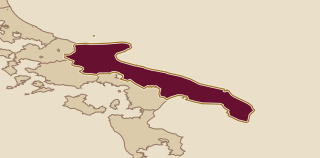
Casa Vinironia draws from more than one Italian region. The flagship Appassimento Grande Edizione pulls its dominant grapes, Negroamaro and Primitivo, from Puglia, the long heel of the Italian peninsula, where a hot continental climate and flat limestone plains push grapes toward high sugar and deep colour. Those varieties are blended with Merlot and Malvasia Nera. The Palloncino Aglianico reaches further north into the volcanic heartland associated with Campania and Basilicata, where Aglianico produces dense, tannic red wine with high natural acidity. The Soprano Pinot Noir comes from Trevenezie IGP, a broad geographic indication covering Veneto, Trentino-Alto Adige and Friuli-Venezia Giulia in northeastern Italy, a zone where cooler alpine air tempers the grape toward lighter fruit and firmer acidity.
No confirmed vineyard address, soil data or farming certification exists for Casa Vinironia's own sourced grapes. The range should be read by grape and method rather than by named parcel or terroir.
In the cellar
Vineyards and cellar
For the Appassimento Grande Edizione, grapes are dried on the vine and harvested late in autumn. Leaving the fruit on the canes concentrates sugar, deepens colour, and builds the dark, jammy fruit character that defines the style. The must then ferments in stainless steel, which preserves primary fruit aroma without adding oak at the fermentation stage. Three months of oak ageing follow, contributing the chocolate, vanilla and coffee notes that arrive alongside the dried-fruit core. The wine is lightly sweet despite completing fermentation, because the dried-fruit concentration and residual sugar sit above the wine's soft tannin base.
No cellar specifications were confirmed for Palloncino Aglianico beyond the grape composition. No farming or winemaking details were confirmed for Soprano Pinot Noir.
Wines to know
The range in view
Three bottles form the confirmed range.
Appassimento Grande Edizione is the commercial centre. The 2025 vintage blends 50% Negroamaro with 20% Merlot, 20% Primitivo and 10% Malvasia Nera. It is full-bodied, with dark cherry, prune, chocolate praline, coffee and vanilla from the oak, a lightly sweet palate, soft tannins and a long fruit-forward finish. The appassimento method is responsible for the weight and the dark fruit concentration; the stainless steel fermentation keeps primary fruit aromas intact before the oak phase rounds them with spice and sweetness.
A useful way in
A bottle to begin with
Start with the Appassimento Grande Edizione. It is the bottle with the clearest production story: Negroamaro and Primitivo from Puglia, grapes dried on the vine through autumn, stainless steel fermentation to keep the fruit fresh, then three months in oak for the chocolate and spice layer. The palate is warm and accessible, with dark cherry and prune at the centre, soft tannins that open quickly, and a long finish that stays on dried fruit rather than astringency. It is not a challenging wine, and that is the point. It delivers the appassimento style cleanly, with enough grape and cellar detail behind it to explain how it was made.