
Why it matters
The producer
Raposeira selects, transports and vinifies its own grapes. Its oenologists closely supervise every stage of production. The second fermentation takes place in bottle by the traditional or classical method. The wine becomes sparkling in the same bottle that later reaches the glass. Humidity, light and temperature are controlled in the cellar.
Raposeira's oldest underground cellar holds about 2 million bottles. The producer sells about 2.5 million bottles each year. Raposeira also riddles bottles by hand, turning them so sediment gathers in the neck.
Place and vineyards
Where the wines begin
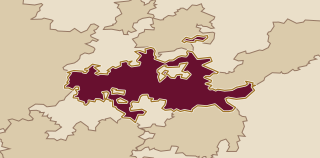
Lamego is the production base for Caves da Raposeira. Raposeira owns about 30 hectares of vineyards. Making all of its sparkling wine requires grapes from about 100 hectares, so it purchases fruit from local farmers. Production in Lamego draws on both owned vineyards and local farmers.
Wines to know
The range in view
Peerless Bruto and Velha Reserva Bruto occupy different cellar ageing tiers.
Raposeira Peerless Bruto 2016 is made from equal parts Pinot Blanc and Viosinho. It receives at least four years in the cellar. Its bubbles are very fine and persistent. The aroma is fresh, delicate and fruity. The palate is balanced and fine, with good acidity.