
Why it matters
The producer
Charles and Zelda Fox bought a fruit farm in the Elgin Valley in 2005 and cleared every orchard. The property, called Furneaux farm, had been planted with apples, pears, and plums. The Foxes replanted it block by block with Chardonnay, Pinot Noir, and Pinot Meunier, the three varieties grown in Champagne, and built an underground cellar five years later. Their first Cap Classique, the South African term for traditional-method sparkling wine, went to market in 2012.
That founding choice, a complete conversion from tree fruit to a single sparkling-wine category, has defined everything since. The estate grows no still-wine varieties, produces no table wine, and makes no wine outside the Cap Classique method. In 2025, the 2018 Cipher Blanc de Noirs received 98 points from the Platters Wine Guide and the title of Cap Classique of the Year, one of the most prominent sparkling accolades in South Africa.
Place and vineyards
Where the wines begin
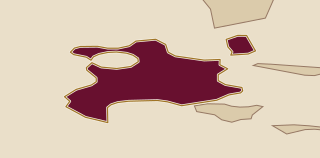
The Elgin Valley sits at elevation in the Western Cape, high enough above the coastal belt to stay cooler through the growing season than the Stellenbosch and Franschhoek valleys to its west. The valley is apple country: farms at altitude with long autumns and cold winters. That climate shaped what Furneaux farm grew before 2005 and shapes what it grows now. Cool temperatures slow ripening, hold acidity in the grapes, and produce the kind of lean, mineral base that traditional-method sparkling wine depends on for its mousse and its freshness in the glass.
The Elgin designation appears on Charles Fox bottles as Cuvée Elgin Vintage Brut, making the valley's name part of the label and connecting the wine's character directly to the place that produced it.
In the cellar
Vineyards and cellar
All three varieties grown at Charles Fox, Chardonnay, Pinot Noir, and Pinot Meunier, serve the sparkling range. Chardonnay contributes the citrus lift and fine bubbles. Pinot Noir supplies body, red-fruit depth, and the capacity for Blanc de Noirs production, where the clear juice of a dark-skinned grape becomes a pale golden wine. Pinot Meunier adds a rounder, softer element that fills the mid-palate.
The 10 blocks at differing elevations and aspects produce different fruit across the same harvest. South-facing blocks retain more acidity; north-east facing blocks ripen slightly earlier and produce softer, more developed fruit. Winemaker Nicolas Follet works with that variation at the blending stage, selecting juice from individual blocks to build each cuvée.
Wines to know
The range in view
The Charles Fox range is built around three Cap Classique expressions, each drawing from the same 6.3-hectare vineyard but arriving at a different character.
Reserve Brut is the estate's entry cuvée and the most mineral-driven of the three. It opens with bright, fresh citrus and a clean mineral note, settles into a silky texture in the mouth, and finishes with a delicate touch of raspberry. The acidity is firm and direct. It is the wine that shows the Elgin cool-climate signature most plainly.
A useful way in
A bottle to begin with
Start with the Cipher Blanc de Noirs. It is a Blanc de Noirs Cap Classique made from Pinot Noir grown at altitude in the Elgin Valley, pressed as a white wine, and aged in the underground cellar to full maturity before release. The nose is soft and honeyed, with almond from the lees; the palate is creamy and fresh at once, the fruit weight held in check by a firm, clean acid line. The finish is long, with the quiet biscuit note that comes from extended time in bottle. The 2018 vintage earned 98 points and Cap Classique of the Year at Platters 2025.