
Why it matters
The producer
Château de Myrat's recent history is marked by a complete vineyard restart. The de Pontac family acquired the estate in 1937, and sisters Elisabeth and Slanie de Pontac now manage it. The family connection to Bordeaux wine reaches further back: Jean de Pontac founded Château Haut-Brion in 1533.
The estate produces about 2,000 cases of sweet Bordeaux wine each year. That modest annual volume sits alongside a formal classification and a clear house style, built around ripe fruit, French oak and acidity that keeps the palate moving.
Place and vineyards
Where the wines begin
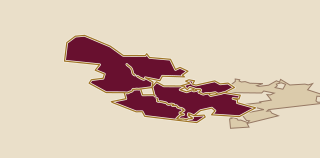
Barsac is the commune, while Sauternes is the appellation named on the broader wine map. Château de Myrat belongs to both descriptions: a Barsac estate making sweet Sauternes wine. The distinction helps place the bottle accurately. Its label connects a specific commune with one of Bordeaux's recognised sweet-wine appellations, while the wine itself carries the ripe fruit, honey and floral character associated with the style.
The estate sits on a limestone-based Haut-Barsac plateau. Limestone and the elevated plateau are linked here with mineral freshness, giving the wine a firm, lively line beneath its sweetness. Fruit and honey can feel generous in the glass, while the site keeps the finish from becoming flat or cloying.
In the cellar
Vineyards and cellar
Sémillon is vinified and aged in barrels that are 30 percent new French oak. The final blend then matures for an average of 18 months in 33 percent new French oak before bottling. The cellar work places vanilla, roasted nut and spice alongside the wine's sweet fruit, while the extended ageing allows the palate to broaden and lengthen.
The vineyard's own history also shapes the bottle. The complete replanting created the current foundation of the estate's production, and the return of wine in 1991 marked the first vintage from those replacement vines. Fruit ripeness and oak flavour sit within that longer agricultural reset.
Wines to know
The range in view
The range centres on Château de Myrat, a sweet Bordeaux wine from Barsac, made at approximately 2,000 cases annually. No second cuvée, dry wine or separate vineyard bottling is established here, so the vintage is the main point of variation.
The 2016 reads as luscious and honeyed, with pineapple, apricot, mango and vanilla bean. The 2017 shifts toward honey-coated candied citrus and flowers, with fresh acidity balancing the sweetness. The 2019 brings dried apricot, honeyed tropical fruit, flowers and spice, followed by vanilla, honey, roasted nut and candied orange. Across the vintages, sweetness, ripe fruit, oak, floral notes and fresh acidity define the range.
A useful way in
A bottle to begin with
Château de Myrat 2019 is the bottle to begin with. It brings the Barsac setting, the estate's Sémillon-led cellar work and its sweet Bordeaux style into one glass. Dried apricot, tropical fruit, flowers and spice rise first, followed by a sweet, lifted palate with vanilla, honey, roasted nut and candied orange. Fresh acidity keeps the wine moving through the finish, while 18 months of final maturation in partly new French oak adds breadth and savoury detail.