
Why it matters
The producer
The first written record of Dereszla dates to 1406, when the property belonged to the Hungarian royal court. The estate took its physical shape in the eighteenth century, and those origins are still legible in the underground cellars that run for more than a kilometre beneath the village of Bodrogkeresztúr.
A full renovation in 2003 brought modern winemaking equipment into those historic galleries without altering the tunnels themselves. The renovation also brought a change in technical culture: the owners who carried it out came from Champagne, with a house background in traditional-method sparkling wine. That encounter between a Champagne sensibility and a medieval Tokaj cellar produced the range Dereszla makes today.
Place and vineyards
Where the wines begin
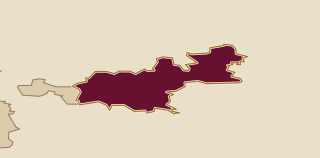
Bodrogkeresztúr sits in the Tokaj-Hegyalja, the protected designation that stretches across the foothills of northeastern Hungary where the Bodrog and Tisza rivers meet. The region's continental climate, volcanic soils, and autumn morning mists over the rivers create the conditions for botrytis, the noble rot that concentrates sugars and develops the aromas in Tokaji Aszú.
Dereszla's six vineyard sites, Dereszla, Lapis, Henye, Hatalos, Zsadány, and Várhegy, cover different soil profiles across the designation. That variation matters: Tokaj's volcanic geology is not uniform, and the transition between rhyolite tufa, loess, and clay produces grapes with different sugar levels, acidity, and aromatic character. Winemakers who work across multiple soil types can blend for complexity in a way that a single-parcel estate cannot.
In the cellar
Vineyards and cellar
Across 140 hectares in six named sites, Furmint is the main grape, with Hárslevelű playing a secondary role, most visibly in the Sparkling Brut. Furmint's naturally high acidity and susceptibility to botrytis make it the foundation of both the dry table wines and the sweet aszú ladder. Its thick skin is what allows the botrytis infection to concentrate sugars without collapsing the berry; the resulting must carries both richness and the acidity that keeps the wine from tipping into heaviness.
In the cellar, reductive vinification means minimal oxygen contact from crush through to bottling. For the dry Furmint, that approach keeps the primary fruit character clear: high-acid, direct, with the volcanic mineral grip that Tokaj's soils produce. For the sweet wines, it preserves the lifted apricot and floral aromatics that botrytis adds, rather than allowing them to evolve into heavier oxidative notes.
Wines to know
The range in view
The range at Dereszla is a complete map of what Tokaj produces, from the driest expressions of Furmint to the sweetest form of aszú.
Dry Furmint, the entry point, is made to be taut and direct: high acidity, citrus and apple fruit, a mineral finish from the volcanic soils, and no residual sweetness. It drinks like a serious central European white, with the acidity to age three to five years without losing its edge.
A useful way in
A bottle to begin with
The Tokaji Aszú 5 Puttonyos is the first bottle to choose. It is the wine Dereszla was built around: Furmint grown on six soil types, botrytised grapes harvested individually, blended to a 5 puttonyos concentration and vinified with the reductive care that distinguishes this cellar. Dried apricot, honeycomb and dried flowers on the nose; on the palate, juicy and full-bodied with balanced acidity and the kind of persistence that rewards drinking anywhere between now and 2040. Tokaji Aszú is the most historically significant sweet wine category in central Europe, and the 5 Puttonyos version here shows exactly why: concentrated enough to be memorable, acidic enough to stay lively, and built to develop across two decades.