
Why it matters
The producer
Wine grapes have been grown at Château La Nerthe since the 1500s. The main château dates to 1736. The Richard family acquired the estate in April 1985, and the property is associated with the Châteauneuf-du-Pape appellation.
The estate makes both red and white wines. Its vineyard planting includes every grape type permitted by the appellation, while the bottles use different combinations of red and white varieties. The range includes red and white wines made from different combinations of grape varieties.
Place and vineyards
Where the wines begin
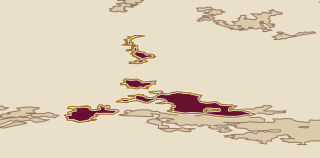
Châteauneuf-du-Pape is the appellation associated with La Nerthe. In 1991, the estate extended its holding from 60 to 90 hectares by acquiring plots in neighboring La Crau. The vineyards therefore include land from more than one named area within the appellation.
Châteauneuf-du-Pape permits 13 grape types, and La Nerthe cultivates all of them. This gives the estate a broad permitted palette for red and white wines, with the blend able to combine several varieties inside one appellation.
Wines to know
The range in view
The range includes Château La Nerthe Châteauneuf du Pape Rouge 2020 and Châteauneuf-du-Pape Château La Nerthe Blanc 2024. The 2020 Rouge contains 38% Syrah, 35% Grenache, 25% Mourvèdre, 1% Cinsault and 1% other varieties. Syrah commonly contributes dark fruit and tannin, Grenache brings ripe fruit and body, and Mourvèdre adds darker fruit and savoury tannin.
The flagship Château La Nerthe Rouge follows a different standard formula, with 55% Grenache, 17% Syrah, 15% Mourvèdre, 7% Cinsault, 3% Counoise and the remaining 3% from other varieties. The flagship formula has more Grenache and less Syrah than the 2020 composition.