
Why it matters
The producer
The Grand Vin comes from approximately 60 hectares of exceptional terroirs from the former Léoville estate. The wider vineyard covers 98 hectares, planted to 67% Cabernet Sauvignon, 23% Merlot and 10% Cabernet Franc. Cabernet Sauvignon leads the planting, with Merlot and Cabernet Franc completing it.
The estate is part of Domaines Delon and managed by the Delon family. Its wine style is firm, austere, powerful and classic Bordeaux. In top vintages, the tannins need 15 to 20 or more years to develop.
Place and vineyards
Where the wines begin
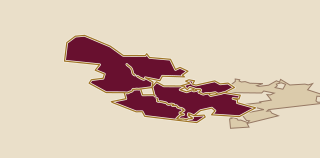
The château is in Saint Julien. The Grand Clos contains approximately 50 hectares on the northern side of the appellation, next door to Château Latour and bordering Pauillac. The parcel places the estate close to the boundary between Saint Julien and Pauillac.
The Grand Clos has deep gravel soils. Gravel allows rainwater to move away and stores warmth after sun, helping Cabernet Sauvignon ripen while keeping the root zone from staying waterlogged. The ground suits the estate's Cabernet Sauvignon led planting and firm tannin style.
In the cellar
Vineyards and cellar
Grapes ferment in temperature controlled wood, concrete or stainless steel vats. The cellar also includes eight oak vessels ranging from 176 to 290 hectoliters. Malolactic fermentation takes place in tank.
Recent vintages spend approximately 18 months ageing in approximately 90% new French oak before bottling, with the percentage varying annually. Barrel ageing allows oxygen to soften tannin gradually, while new French oak contributes spice and wood derived texture.
Wines to know
The range in view
Château Léoville Las Cases is the Grand Vin, drawn from exceptional terroirs of the former Léoville estate. Clos du Marquis is a second wine with a different range position and a more immediate fruit profile.
Clos du Marquis shows ripe black fruit aromatics, subtle gravelly mineral notes and a juicy fruit core. Firm tannins are balanced by freshness, with closely knit complexity.