
Why it matters
The producer
Château Les Paruades works on a small 3.5 hectare scale, with Merlot, Cabernet Sauvignon and Cabernet Franc planted in the vineyard. The main wine uses a narrower blend, 70 percent Cabernet Sauvignon and 30 percent Merlot, so the vineyard planting and the bottle composition are not the same thing. Cabernet Franc belongs to the estate’s vines, but no percentage is assigned to it in the main wine.
The cellar follows traditional Médoc vinification, with total destemming and fermentation in stainless steel and concrete vats. The finished red therefore carries a clear record of its grape balance, fruit profile and firm tannins, with medium acidity keeping the palate lively.
Place and vineyards
Where the wines begin
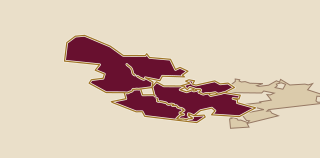
Macau en Médoc gives the wine its address, while the nearby Margaux appellation and the edge of the Gironde place the estate inside the Médoc’s river shaped landscape. The label presents a red Bordeaux blend from this specific corner, led by Cabernet Sauvignon and supported by Merlot.
That geography also separates Château Les Paruades from a generic regional blend. The bottle begins with a named village setting, a 3.5 hectare property and a clayey palus vineyard, then arrives in the glass as a dark fruited red with firm tannins.
In the cellar
Vineyards and cellar
The vineyard contains three Bordeaux grapes, each planted on clayey palus soil. The main bottling selects Cabernet Sauvignon and Merlot in a 70 percent to 30 percent blend, leaving Cabernet Franc as part of the vineyard planting rather than assigning it a role in this wine’s stated composition.
In the winery, total destemming removes the stems before fermentation. The wine then ferments in stainless steel and concrete vats, vessels that keep the process focused on the grapes and the red wine itself. The finished profile moves from floral and black fruit aromas to ripe dark berries, firm tannins, medium acidity and a smooth finish.
Wines to know
The range in view
The main Château Les Paruades bottling is a red Bordeaux blend from a 3.5 hectare plot on palus soil. Its 70 percent Cabernet Sauvignon and 30 percent Merlot composition gives the range a clear Cabernet led center, with black fruit, mineral nuance, firm tannins, medium acidity and a smooth finish.
A separate 2020 label, Gisèle, carries a different blend of 65 percent Merlot, 20 percent Cabernet Sauvignon, 10 percent Cabernet Franc and 5 percent Petit Verdot. It belongs beside the main wine as a separate label, not as an alternative name for the 70 percent Cabernet Sauvignon bottling.