
Why it matters
The producer
Alain Coudert has made the wines at Clos de la Roilette since 1984, and his son Alexis has recently joined him. The estate takes its name from a named place in Fleurie, while its standard Fleurie cuvée is part of the range. The range includes Cuvée Tardive and Griffe du Marquis, two bottlings that move further into ageing and barrel treatment.
In 1984, Alain Coudert assumed winemaking responsibilities at Clos de la Roilette. His son Alexis has recently joined him, bringing a second generation into the estate's work. The current family line therefore runs from Alain Coudert's long tenure to an active handover under the same Fleurie name.
Place and vineyards
Where the wines begin
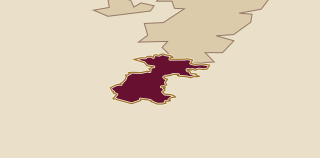
The Clos de la Roilette named place covers roughly nine to ten hectares on one of the best slopes in Fleurie. Fleurie is one of the Beaujolais Crus, so the village name identifies a cru wine within Beaujolais. The label combines the estate name with the Fleurie appellation, linking the bottle to both a specific place and its village cru.
Heavy clay and granite are the named ground types. Clay can retain water, while granite generally drains faster, changing how water moves around the roots and how fruit ripens. These physical differences can affect body, acidity and fruit character in wine.
In the cellar
Vineyards and cellar
Griffe du Marquis comes from the same old vines that produce Cuvée Tardive and is vinified and aged exclusively in Burgundian barrels. A Burgundian barrel is an oak vessel, and ageing in oak can add spice, texture and gradual oxygen exposure to a wine. The old vines give both cuvées a shared vineyard origin, while the barrel treatment separates Griffe du Marquis in the cellar.
Wines to know
The range in view
The standard Fleurie is a listed wine. Cuvée Tardive needs more ageing time and has greater longevity than the regular Fleurie. Griffe du Marquis is the barrel aged bottling from the same old vines. Across the wines, bottles can be beautiful when young and have the capacity to age five to ten years depending on vintage conditions.
The standard Fleurie has a deep blackcurrant colour with purple hints. It brings cassis, black cherry and a nutty character, with a rich, full palate.