
Why it matters
The producer
Four people created Clos des Fous: soil scientist Pedro Parra, Burgundy-trained winemaker François Massoc, vineyard manager Paco Leyton, and mentor and backer Albert Cussen. Parra and Massoc met while studying wine in Burgundy, then joined Leyton and Cussen in a project that treated Chile's geography as a reason to search harder. The winery's Maule address is only the starting point.
The founders wanted to challenge the idea that Chilean wine had to be industrial, green or overripe. They pursued vineyards farther south, nearer the coast and higher in the Andes, then used minimal winery intervention to keep grape and place visible in the bottle. Paco Leyton is now the sole proprietor, working with Felipe Cartes, an agronomist and enologist from Universidad de Chile who has been the winemaker since 2020.
Place and vineyards
Where the wines begin
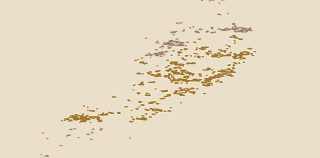
Cauquenes in Maule is the cellar base, while the vineyard network reaches four distinct parts of Chile. Malleco supplies a cool southern setting for Latuffa and for Locura 1 Chardonnay. The Aconcagua Coast supplies Pucalan, a four-hectare vineyard designed and planted by Parra in 2007. Alto Cachapoal supplies Grillos Cantores, a 22-hectare Cabernet Sauvignon vineyard held by Clos des Fous since 2010.
The geographic spread changes how the range is read. The winery name points to Maule, but a bottle can carry a vineyard origin far from the cellar. Locura 1 is therefore a Malleco Chardonnay with Chilean provenance, not a generic Maule white.
In the cellar
Vineyards and cellar
Latuffa is dry-farmed and biodynamic, and its planting of Pinot Noir, Chardonnay and Riesling gives one vineyard several roles within the range. Pucalan's design by Parra adds another kind of producer choice, beginning with the way the coastal site was established. Grillos Cantores gives Cabernet Sauvignon a named Alto Cachapoal address and a substantial vineyard base.
In the cellar, Cartes uses native-yeast fermentations, long fermentations, soft pressings, lees ageing and minimal pumping. Native yeast and long fermentation allow the wine to develop over time, while soft pressing limits harsh extraction. Lees ageing adds time and contact after fermentation, and minimal pumping reduces movement through the cellar. The methods keep the handling gentle enough for vineyard and grape differences to remain legible.
Wines to know
The range in view
The range moves through Pinot Noir, Cinsault and País on the red and lighter-bodied side, Cabernet Sauvignon through Grillos Cantores, and Chardonnay and Riesling among the whites. Latuffa links three varieties to one six-hectare Malleco vineyard, while Pucalan and Grillos Cantores give the range named coastal and Alto Cachapoal points.
Locura 1 2023 supplies the most developed wine profile in the documented range. It is entirely Chardonnay from Malleco, with medium body, concrete fruit, nine months on lees in stainless steel, no oak ageing and deliberately non-malolactic handling. Lees contact adds palate texture without an oak frame. Stainless steel preserves the cellar's neutral setting, while the absence of malolactic fermentation leaves a firmer acid line. Body, fruit, lees, acidity and oak absence all become part of the bottle's explanation.
A useful way in
A bottle to begin with
Locura 1 2023 is the right first bottle because its details can be followed from label to finish. It is entirely Chardonnay from Malleco, handled without malolactic fermentation, aged for nine months on lees in stainless steel and kept away from oak. In the glass, it offers medium body, concrete fruit, a lees-shaped palate, a firm acid line and no oak character. One bottle holds together the producer's southern vineyard reach, its preference for Chardonnay from a defined site and its quiet cellar handling.