
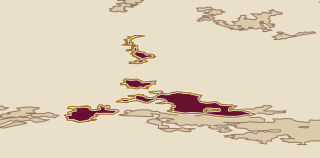
Why it matters
The producer
Paul Avril began producing and selling Clos des Papes in 1896. The Avril family has lived in the village for centuries and helped create the Châteauneuf-du-Pape appellation. The first Paul Avril was one of the key people responsible for its official birth.
Paul Vincent Avril, born in 1965, returned to work with his father in 1988 after training in Burgundy and now directs the estate. The Châteauneuf-du-Pape AOC directory lists 32 hectares for Clos des Papes.
Place and vineyards
Where the wines begin
Clos des Papes takes its name from a parcel near the pope's castle, where the land has been surrounded by walls. The 2023 Rouge is a Châteauneuf-du-Pape, placing the appellation name directly on the bottle.
The estate's name therefore refers to a physical parcel and to the local castle that gave the appellation its name.
Wines to know
The range in view
Clos des Papes Rouge is a red Châteauneuf-du-Pape from the 2023 vintage. The red wines are aged in old foudres for approximately 15 months before bottling. Foudres are large wooden vessels that allow gradual oxygen contact with less direct oak flavour than new barrels.
Clos des Papes uses no new wood in its winemaking, and its wines are not filtered.