
Why it matters
The producer
Collis Heritage came into being in December 2023 as the commercial face of a cooperative that had been quietly consolidating Veneto wine for seven decades. The vehicle was a merger: Cantine Riondo, built around volume sparkling wine and Prosecco, joined forces with Casa Vinicola Sartori 1898, whose name and red-wine heritage had been rooted in Valpolicella since the nineteenth century. The result was a producer that went live with 40 million bottles, €100 million in turnover, and distribution reaching 70 countries.
The company is headquartered at Villa Maria in Negrar, a village in the Valpolicella zone west of Verona. Its parent is Collis Veneto Wine Group, a cooperative organization that traces its origins to the 1950s and was formally constituted as a group in 2008. More than 2,000 grower families contribute fruit. Six wineries and four bottling centres operate across the provinces of Verona, Vicenza, and Padua. Claudio Tamellini became president at formation; Pierluigi Guarise took the role of managing director.
Place and vineyards
Where the wines begin
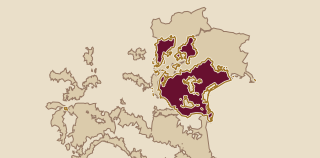
Veneto is the most productive wine region in Italy by volume, and Collis Heritage operates across its full width. Vineyards run in an arc from Valpolicella in the west, where basalt and limestone hills above Verona support Corvina-based reds including Amarone and Ripasso, east to the Soave plateau, where volcanic and alluvial soils grow Garganega for dry white wines. The arc continues through Vicenza's wine zones and reaches the flat plains around Padua, where Glera vines supply Prosecco DOC.
In the cellar
Vineyards and cellar
Collis Heritage operates through its grower network rather than farming a single unified estate. Individual growers across Verona, Vicenza, and Padua manage their own parcels and deliver fruit to the group's six wineries. Agronomists, oenologists, and commercial teams work across the production chain. Integrated pest management and certified protocols govern vineyard work, with the stated aim of reducing chemical inputs and protecting soil health and biodiversity. Mont'Albano has held organic certification since 1985, predating the formation of both Collis Veneto Wine Group and Collis Heritage.
The techniques are appellation-driven rather than defined by a single house philosophy.
Wines to know
The range in view
Collis Heritage operates through six brands, each with its own range and primary appellation territory. Sartori di Verona is the historic red-wine house, associated with Valpolicella, Ripasso, and Amarone. These wines are built from Corvina, Corvinone, and Rondinella grown on hillside parcels above Verona. Valpolicella DOC is a lighter red, typically fresh and cherry-fruited with moderate tannin. Ripasso, refermented over dried skins from the Amarone production, picks up additional body, dried-fruit character, and grip. Amarone della Valpolicella, made from grapes dried for several months before pressing, delivers concentrated dark fruit, substantial alcohol, and the firm tannin that comes from long skin contact and extended ageing.
Soave and Soave Classico, built from Garganega grown on volcanic soils east of Verona, round out the geographic range with dry whites that carry a mineral, almond-edged character.