
Why it matters
The producer
The stone building at the centre of Corteforte dates to the 1400s. Carlo Maria Cerutti, who owns and runs the estate today, restored the property and planted the surrounding land back into vines. The property sits in Fumane, a village in the Valpolicella Classico zone about 20 kilometres north of Verona, where the hills carry the native varieties: Corvina Veronese, Corvinone, Rondinella, and Molinara, which underpin Amarone, Ripasso, and Recioto.
Corteforte produces around 25,000 bottles a year from 4.5 hectares. It holds membership in FIVI, the Federazione Italiana Vignaioli Indipendenti, which groups independent growers who bottle their own fruit. The estate earned organic certification in 2018.
Place and vineyards
Where the wines begin
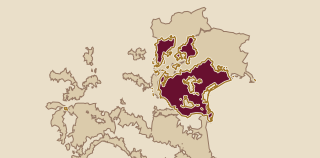
Fumane sits in the western Valpolicella Classico hills, where the valley topography moderates the heat of the Veneto plain. The Classico designation marks the historical heartland of Valpolicella production: tighter terraces, older vineyards, and the altitude that allows fruit to build slowly before harvest.
The native grape varieties grown here define the three wines the zone is known for. Amarone is dried, fully fermented, and dry. Recioto follows the same drying process but fermentation stops before all the sugar converts, leaving a sweet wine. Ripasso takes already-fermented Valpolicella wine and re-passes it over the pomace left from Amarone production, adding body and colour. All three styles require the same raw material; what changes is what happens after harvest.
In the cellar
Vineyards and cellar
The 4.5 hectares are planted to Corvina Veronese, Corvinone, Rondinella, and Molinara, the four native varieties of the Valpolicella Classico zone. Organic farming has been in place since 2018.
For the Amarone Riserva, the grapes are dried through the appassimento process, which concentrates sugars and flavours before fermentation. The 2015 Riserva spent 30 months in Burgundian tonneaux, followed by 24 months in stainless steel tanks, and a further 18 months in bottle before release, a total élevage of six years from harvest to market.
Wines to know
The range in view
The range covers the three main expressions of appassimento viticulture in Valpolicella Classico. The Amarone della Valpolicella Classico Riserva is the most extended bottle: grapes dried and concentrated, then fermented to a dry red wine with a six-year élevage from harvest through barrel, tank, and bottle before release. The Valpolicella Ripasso sits in the middle of the range, built on the same grape varieties and the same cellar logic but given its body through the pomace re-passing rather than primary drying. It spends six to eight months in French oak, carrying sour cherry, forest floor, plum, leather, and pepper with firm but approachable tannins.
The Recioto della Valpolicella Classico is the sweet wine of the estate, with fermentation arrested to preserve residual sugar. Aromas run to ripe berries, cherry jam, plum, liquorice, cinnamon, vanilla, and dark chocolate; the palate is silky and rounds sweetness against acidity. A small range of labelled bottlings, including Terre di San Zeno and Vigneti di Osan for Amarone and Podere Bertarole for Ripasso, appears across various markets.
A useful way in
A bottle to begin with
The Amarone Classico Riserva is the bottle where Corteforte's approach is clearest. The 2015 is a blend led by Corvina, with Rondinella and indigenous varieties; it went through 30 months in Burgundian tonneaux, then 24 months in stainless steel, then 18 months in bottle. That sequence is not rushed or condensed: the wine earns its dry weight and long tannic finish through time rather than extraction. The three-stage élevage moves the wine from wood to neutral vessel to glass-ready state, and the result at the end of that sequence is refined tannins and a long, persistent finish.