
Why it matters
The producer
Damianitza sits in Melnik, at the southwestern edge of Bulgaria where the Struma River cuts south toward Greece. It was founded in 1940, nationalized by the communist state in 1947, and returned to private ownership in 1997 with a full overhaul of equipment and organization. The winery's argument is Bulgarian: its range is built on Shiroka Melnishka Loza, the broad-leaved Melnik vine that produces dark, tannic reds specific to this valley, alongside Rubin, a crossing of Nebbiolo and Syrah bred in Bulgaria more than 70 years ago and still bottled as a named variety.
The range runs above 1.4 million bottles per year, spread across four brand tiers. Damianitza is not a boutique operation, but the choice to anchor the portfolio on indigenous varieties rather than purely on Cabernet Sauvignon and Merlot sets it apart from producers who treat international grapes as the default.
Place and vineyards
Where the wines begin
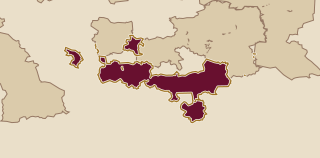
The Struma River Valley runs along Bulgaria's southwestern corridor, close to the Greek border. The climate is dry and hot, which pushes the Melnik vine toward concentrated dark fruit and firm tannin rather than the lighter red fruit profile of cooler Bulgarian regions. Melnik itself is one of Bulgaria's smallest towns and lends its name to the grape: Shiroka Melnishka Loza translates as broad-leaved Melnik vine, and the variety is tied to this valley in both law and character. Wines labelled Melnik come from here, not from the broader Thracian plain to the east.
The Struma Valley floor sits at moderate elevation with a dry and hot growing season. The No Man's Land vineyards draw from a five-mile former Cold War buffer zone along the southern border, land that was sealed from agricultural use for decades.
In the cellar
Vineyards and cellar
The two Melnik varieties differ in ripening: Early Melnik Vine matures sooner and appears across several Damianitza labels, while Shiroka Melnishka Loza, the broad-leaved vine, is slower and produces the darkest, most tannic fruit. Rubin is farmed alongside the indigenous varieties and aged in French oak barrels for seven to eight months, which softens its tannin and adds spice without masking the grape's Nebbiolo-derived firmness.
Damianitza also ferments an Assyrtico in clay pithos, a method that preserves acidity and adds a textural weight distinct from barrel-fermented whites. The facility holds HACCP and ISO 9001:2000 certifications and operates with a stated emphasis on quality control across the full production chain, from incoming materials to distribution.
Wines to know
The range in view
The range divides into four main tiers.
No Man's Land is the most internationally positioned label, drawing fruit from the former border buffer zone. The red opens on ripe blueberry and cherry, then shifts toward sour cherry, plum, and blackberry with forest-floor earthiness underneath. It is the most approachable tier, built for early drinking rather than long cellaring.
A useful way in
A bottle to begin with
No Man's Land red is the right first bottle. It is made from the buffer zone vineyards and carries the story of the place without requiring familiarity with the indigenous Melnik varieties. Blueberry and cherry open cleanly, then deepen into sour cherry and plum across the mid-palate, with blackberry and a thread of forest floor. The tannin is soft enough for early drinking but the fruit is concentrated enough to hold the wine together. It gives a clear picture of what the Struma Valley produces at accessible weight, and it costs less than the Uniqato tier while still showing what Damianitza does when the fruit comes from the right land.