
Why it matters
The producer
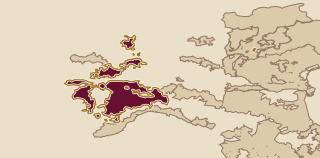
Dezzani does not own the vineyards its wines come from. That is the first thing worth knowing. The winery sits in Cocconato, a hill town in the Asti province of Piemonte, and it reaches outward through cooperative partnerships with hundreds of vineyard-owning families across roughly 1,000 hectares in Monferrato and Langhe. Langhe is the hilly zone south of Alba where both Barbaresco and Barolo DOCG appellations sit. Monferrato is the broader rolling landscape to the north and east. Between them they contain nearly every major Piemontese appellation, and Dezzani draws Nebbiolo from both.
The business was founded in 1934 as a grape production and commercialization operation. It moved into estate bottling across generations, and the current winemaker is Luigi Jr., the third generation in the Dezzani succession. The Rocca family leads the business overall, with five generations in wine behind them. Luigi Jr. was the person who drove international distribution, taking a producer rooted in Asti province to export markets.
Place and vineyards
Where the wines begin
Cocconato sits in the eastern Asti hills, a part of Piemonte that produces Barbera and Grignolino but sits outside the Nebbiolo DOCG zones. To make Barbaresco and Barolo, Dezzani sources from the Langhe, a compact amphitheater of hills running south from Alba where the Tanaro River cuts through calcareous clay and limestone soils that define Nebbiolo's character in Piemonte.
Barbaresco is the appellation east of Alba, closer to the Tanaro. Barolo is southwest of the city, in a larger zone with more villages and more variation in soil and altitude. Both require 100 percent Nebbiolo and both carry DOCG status, the highest category in Italian wine law. Barolo demands longer minimum ageing than Barbaresco and tends to build tighter, slower-evolving wines. Barbaresco reaches its balance earlier and shows its floral character sooner.
In the cellar
Vineyards and cellar
Dezzani works with hundreds of grower families across Monferrato and Langhe through the Villa Rivalta cooperative and associated partnerships. The approximately 1,000 hectares covered by those partnerships give the winery access to Nebbiolo fruit from multiple communes in the Langhe, which in turn allows separate bottlings at different appellation and quality levels.
In the cellar, the two Barolo expressions use different oak regimes. The Miliasso Barolo 2019 was aged 18 months in Slavonian oak, a large-format eastern European oak that transfers less flavour than French barrique, followed by 20 months in bottle before release. That combined élevage of 38 months before the wine leaves the producer is longer than the minimum Barolo DOCG requirement and longer than the San Carlo Barolo ageing. The La Vecchia Via Barbaresco spends 26 months in total ageing with at least 6 months in oak, a schedule that meets the DOCG minimum and keeps the wine accessible.
Wines to know
The range in view
The premium range is built around Nebbiolo in three forms.
La Vecchia Via Barbaresco is Nebbiolo from the Barbaresco DOCG, aged 26 months total with at least 6 months in oak. It is the most approachable entry into Dezzani's Nebbiolo range: floral on the nose with roses, cherries, violets, and ripe strawberries alongside spice, and carried by acidity with a long finish. The fruit character is open and expressive without the weight or tannin grip of the Barolo bottlings.
A useful way in
A bottle to begin with
Start with the La Vecchia Via Barbaresco. Barbaresco DOCG is Nebbiolo before it becomes the long argument that Barolo requires. The 2022 opens on roses and violets, moves through cherries and ripe strawberries with spice behind them, and holds together with an acid line that keeps the finish alive. The 26 months of ageing have rounded the tannins without stripping the wine's character. It gives a clear picture of what Langhe Nebbiolo does without demanding years of patience or a full meal to unlock it.