
Why it matters
The producer
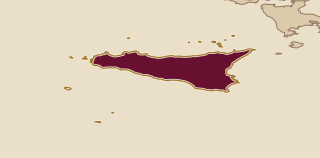
Feudo Disisa sits above the village of Grisì in western Sicily, in the Monreale DOC, a zone of elevated vineyards on the slopes below the hilltop cathedral town of Monreale, roughly twenty kilometres inland from Palermo. The Di Lorenzo family has managed the estate without interruption since 1867 and is now in its fifth generation. That continuity is physical as much as biographical: the cellar Renato Di Lorenzo built in the early 1870s still stands and still processes every harvest.
The estate farms 150 hectares of vine, all estate-grown, using no purchased grapes. Altitude is the dominant geographic fact. The vineyards range from 350 to 500 metres, which in Sicily is enough to shift growing conditions considerably: cooler nights, longer ripening, better acid retention than the coastal plains.
Place and vineyards
Where the wines begin
Monreale DOC is a western Sicily appellation centred on the ancient hill town of the same name. The zone sits inland, above the coastal heat that shapes most low-elevation Sicilian wine. At Feudo Disisa's elevations, between 350 and 500 metres, the vines build acidity through cooler nights and a longer growing season than the island's average. That acid retention is not decorative: it is the structural fact that keeps the estate's Grillo fresh through six months of steel ageing and carries the aromatic persistence to the finish of the wine.
The Monreale DOC label places the estate firmly in a Sicilian context while signalling altitude and inland position. Grillo on the label tells a buyer the wine is built from a native crossing rather than an international variety, and the combination predicts the aromatic profile: citrus, stone fruit, flower, and a saline, citrus-peel finish rather than tropical softness.
In the cellar
Vineyards and cellar
All 150 hectares are farmed on the estate. No purchased grapes enter the range. Vineyards at 350 to 500 metres give the fruit an extended growing season, which builds aromatic complexity and maintains the acid line that defines the Grillo's palate.
In the cellar, the Grillo is fermented at 15 to 18 degrees Celsius, a cool range that slows yeast activity and locks in the aromatic compounds the grape carries from vine to tank. After fermentation the wine stays in steel vats for six months, then spends sixty days in bottle before release. No oak. The method is one of preservation rather than addition: the aim is to deliver lantana flower, zagara blossom, pear, and passion fruit intact, then let the grape's natural acid carry the finish.
Wines to know
The range in view
The estate produces around twelve wines across four categories. The Territoriali tier is built on estate-specific native varieties tied directly to grape and place. This is where the Grillo lives.
The Grillo Territoriali is 100% Grillo, a variety that carries the genetics of two older Sicilian grapes: Catarratto, the high-volume native white farmed across the island, and Zibbibo, also called Muscat of Alexandria, the grape behind the sweet Passito wines of Pantelleria. The crossing inherits Catarratto's citrus edge and Zibbibo's aromatic lift. Cool fermentation and steel ageing mean neither parent's character is buried under oak or softened by malolactic enrichment.
A useful way in
A bottle to begin with
The Grillo Territoriali is the bottle to start with. It is 100% Grillo from estate vineyards between 350 and 500 metres, fermented cold and aged in steel, with no oak at any stage. In the glass it opens on lantana flower and zagara blossom, moves to pear and passion fruit, then closes on dried citrus peel with a firm acid line running underneath. The wine is aromatic, balanced, and clean. It costs nothing in oak character or weight to deliver what the grape and the altitude produce between them. Begin here to understand both the grape and what the Monreale hillside does to it.