
Why it matters
The producer
Somewhere beneath the Benedetti family's vineyard rows in Negrar, under several metres of hillside soil, lie the mosaic floors of a Roman villa built in the third century AD. The vines had been growing above them for the better part of seventeen centuries before anyone knew. That detail says something about this estate: it is the kind of place where time accumulates quietly, and where the people working it tend to find things worth keeping.
The family arrived on this hillside in the late nineteenth century. Domenico Benedetti came first, cultivating grapes on the Negrar slopes above Verona. His son Giuseppe was the first to produce wine on the property rather than sell the harvest in bulk. Giuseppe's son Adriano developed the estate further; the azienda still carries his name. Simone and Matteo Benedetti, brothers and the fourth generation, run it now.
Place and vineyards
Where the wines begin
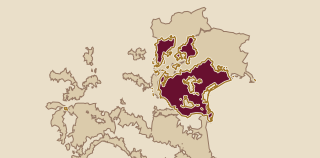
Negrar is one of the five valleys that form the Valpolicella Classica zone, running north from the city of Verona into the foothills of the Lessini mountains. The hills rise steeply, the vineyard parcels sit at elevation, and the exposure favours slow, even ripening through the growing season. That altitude and air circulation matter most for Amarone production: grapes harvested at full maturity and then dried in lofts need cool, ventilated conditions to desiccate slowly rather than rot.
Valpolicella Classica on a label signals origin from this historic core, not from the flatter extended zone to the east. The distinction shapes the wine: hillside Classica fruit typically carries brighter acidity and a sharper aromatic edge than valley-floor Valpolicella, qualities that carry through into every tier of the Benedetti range.
In the cellar
Vineyards and cellar
For Valpolicella Classico Superiore, grapes from the high-hill parcels are harvested and vinified directly: barrel aging in small to medium casks, then at least three months of bottle refinement before release. The pergola Veronese canopy means later, more even harvest timing on steep ground, and the stony calcareous clay holds day-to-night temperature variation that keeps acidity levels firm through the growing season.
Amarone demands a separate harvest line. Grapes are picked by hand at full maturity, arranged in wooden trays, and carried to the drying lofts where they desiccate naturally over several months. Water loss concentrates everything: sugar, flavour compounds, polyphenols, tannin precursors. The dried must and pomace then undergo slow fermentation in stainless steel, which preserves fruit character rather than adding wood. After fermentation the wine moves to small and medium barrels for aging, then finishes in bottle.
Wines to know
The range in view
The estate produces four wines across the main Valpolicella styles, plus the Linea Mosaico sub-series.
Valpolicella Classico Superiore DOC is the base wine: Corvina, Corvinone, and Rondinella from high-hill parcels, aged in small to medium barrels and bottle-refined for at least three months. Brilliant ruby with faint purple at the rim, it shows violet and ripe cherry on the nose with balsamic lift, a soft and persistent palate with bright acidity, and a spicy black-pepper finish from the Corvina. The lightest wine in the range and the most immediate.
A useful way in
A bottle to begin with
Start with the Valpolicella Classico Superiore. It is the estate's most direct expression of the three native grapes on calcareous-clay hillside soils, without the transformation of drying or repassing, so the character of the place and the grapes reads clearly. Violet, ripe cherry, balsamic lift, bright acidity, black-pepper finish. Aged in small to medium barrels and bottle-refined for at least three months, it shows the estate's cellar approach without the extended complexity that Amarone demands years to open. Drink it with food, give it a year in your own cellar if you have one, and the spice and fruit resolve further.