
Why it matters
The producer
A fourteenth century Provençal wine pitcher gives Domaine du Pégaü its name. The vessel was used during the papal presence in Avignon. Laurence Féraud is the winemaker and proprietor, working with whole clusters in traditional cement vats and twice daily pump overs.
The cellar has no destemmer equipment and no new barrels. Minimal intervention keeps the fermentation method visible in the finished reds, while stems can bring perfume, spice and tannin to the wine.
Place and vineyards
Where the wines begin
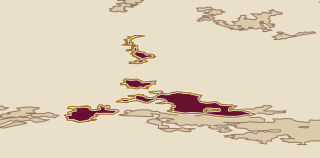
Domaine du Pégaü is based in the Châteauneuf-du-Pape appellation of the Rhône. The appellation name identifies place, while the wines use several Rhône grape varieties in the same red cuvée.
In January 2012, the operation acquired a single block of 41 hectares in Sorgues along the Rhône. The property was named Château Pegau.
In the cellar
Vineyards and cellar
The white wine parcels are farmed with 100% biodynamic techniques. The red grapes undergo whole cluster fermentation in traditional cement vats, leaving the stems in contact with the fermenting wine. This can add perfume, spice and tannin, while cement allows fermentation without the flavour of new oak.
Laurence Féraud's cellar uses twice daily pump overs. Pumping fermenting wine over the grape material extracts colour and tannin, and keeps the whole clusters wet during fermentation. The method sits alongside minimal intervention winemaking and the absence of destemmer equipment.
Wines to know
The range in view
Cuvée Réservée is composed of 80% Grenache, 6% Syrah, 4% Mourvèdre and 10% other grape varieties. Its estimated ageing window is five to twenty years.
da Capo is a separate cuvée made from grapes more than 100 years of age. Its estimated ageing window is ten to twenty five years. Cuvée Laurence spends four years in 50 hectoliter wooden tuns, known as foudres, and has an estimated ageing window of five to fifteen years.