
Why it matters
The producer
Domaine du Vieux Lazaret began with Antoine Quiot's 1748 purchase of eight hectares in Châteauneuf-du-Pape. The appellation is the estate's central address, while the red range carries its strongest expression through ripe fruit, spice, and extended maturation. The grape composition of the wines is not specified, so place, cellar time, and taste provide the clearest way into the bottles.
The name comes from a former hospital used to quarantine and treat sick people during major epidemics of the 17th and 18th centuries. That unusual history remains attached to a working wine estate and its labels, linking an old Châteauneuf-du-Pape place name with a range that includes both red and white wine.
Place and vineyards
Where the wines begin
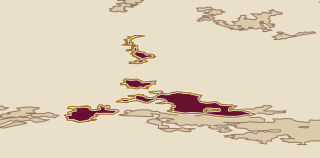
Châteauneuf-du-Pape places Domaine du Vieux Lazaret in the Rhône and supplies the appellation name carried by its red wines. The label begins with that place, while the glass moves toward ripe black and red fruit, wild Provençal herbs, spice, and broad texture. The grape blend is not specified, so the appellation and the cellar record carry more weight than a varietal formula here.
The domaine's vineyard parcels feature the rolled pebbles characteristic of Châteauneuf-du-Pape terrain. They provide a physical marker for the estate's address without requiring claims about drainage, heat, elevation, or exposure. The wines are described through fruit, herbs, spice, tannin, and length, while the pebbles keep those bottles connected to a named landscape.
In the cellar
Vineyards and cellar
Rolled pebbles mark the vineyard parcels, placing the domaine inside the physical setting associated with Châteauneuf-du-Pape. In the cellar, the 2024 red matures for 18 months in vats and barrels, with 15% barrel ageing. Its tasting profile moves from ripe black fruit into spice, then toward compote-like prune, liquorice, and black pepper. The combination of long élevage and limited barrel use gives the wine a clear cellar frame around its ripe fruit character.
Wines to know
The range in view
The standard Châteauneuf-du-Pape red is the central red reference. The 2024 vintage shows deep carmine colour, ripe black fruit, spicy notes, prune, liquorice, and black pepper, with 18 months of maturation in vats and barrels.
The 2020 red offers a more developed vintage expression within the same red-led range. Its place is suggested through ripe berry fruit and garrigue, the savoury wild herbs associated with Provence, while the palate brings sandalwood, exotic spice, fennel, and wood smoke.
A useful way in
A bottle to begin with
Start with the 2020 Châteauneuf-du-Pape red. It gives the most complete picture of the domaine's red style in one bottle: Bing cherry, blackberry, plum, and garrigue rise first, followed by sandalwood, fennel, exotic spice, and wood smoke. The palate is smooth and full, with fine-grained tannins, energy, and lift. It is the right first bottle because the fruit, Provençal herb character, savoury spice, and mouth-filling texture arrive together, making the appellation and the estate's red register easy to taste.